
































By Theophilus Anya | Political Analysis | Frontline Chronicle
“Our golden and last opportunity is the forthcoming general election. If we miss this last one, our unborn children will ask us a big question.”
That sentiment is gaining attention among Nigerians as political activities intensify ahead of the 2027 general elections. For many citizens, the coming election represents a defining moment for the country’s future and an opportunity to decide the direction of its leadership.
The growing concern is not simply about who wins the presidency. It is about whether Nigerians will have a genuinely credible opportunity to choose their leaders without electoral violence, manipulation or institutional compromise.
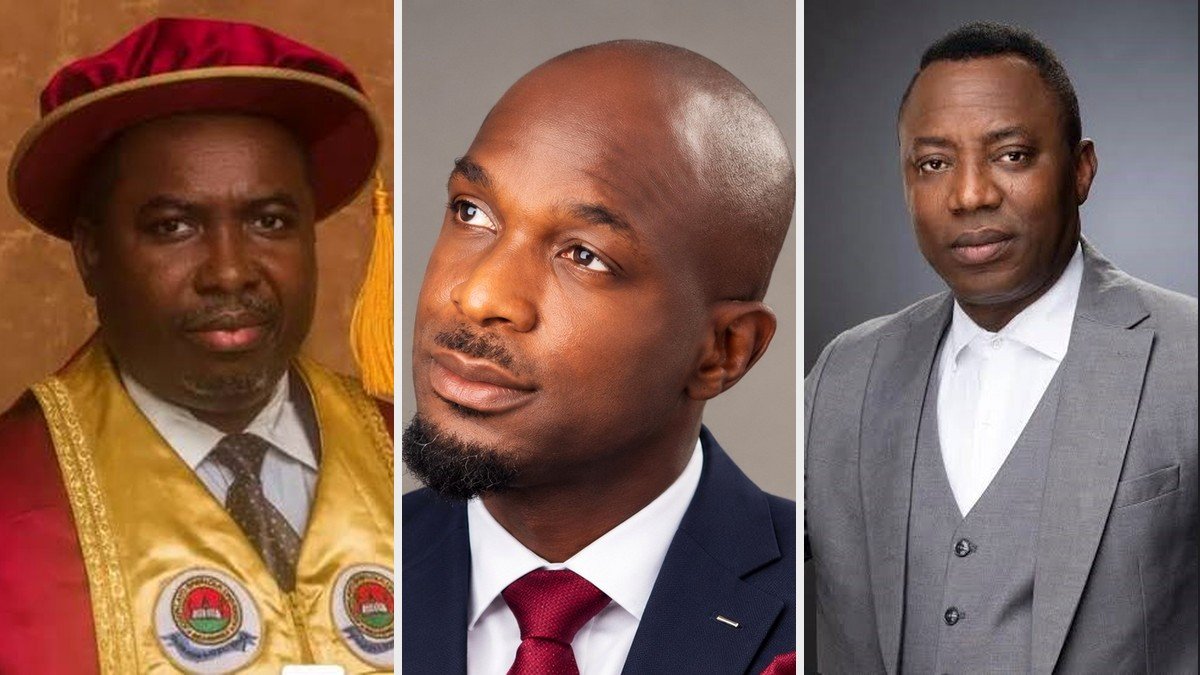
Against this background, human rights activist and African Action Congress (AAC) presidential candidate, Omoyele Sowore, on Monday, November 23, led protesters to the headquarters of the Independent National Electoral Commission (INEC) in Abuja, demanding accountability and rejecting electoral violence and manipulation.
The protest carried a strong political message, with demonstrators chanting, “Tinubu Must Go!”
In a statement accompanying videos and photographs of the demonstration, Sowore described the atmosphere at INEC headquarters as electrifying, saying protesters received him with chants demanding political change.
He said the demonstration was intended to reject electoral violence and manipulation and challenge Nigerians to take an active role in defending the country’s democratic process.
However, Sowore also directed criticism at opposition politicians, accusing some presidential aspirants of waiting for ordinary Nigerians to make sacrifices while they remain occupied with political negotiations.
He wrote:
“While ordinary Nigerians confront the system on the streets, these politicians remain tucked away in cozy conference rooms, negotiating who gets what and who will control Nigeria’s resources if they eventually capture power.”
He added:
“You cannot outsource the struggle for liberation and expect to inherit its rewards!”
His comments raise an important question for the opposition: if politicians seeking power are serious about democratic change, should they not be at the forefront of defending the electoral process?
The responsibility for credible elections cannot rest on ordinary citizens alone. Political parties, candidates, civil society organisations and electoral institutions all have a role to play.
At the centre of the growing public anxiety is INEC, the institution constitutionally responsible for organising and conducting elections in Nigeria.
The commission must understand that public confidence cannot be secured through press statements and assurances alone. It must be earned through transparency, consistency and demonstrable accountability.
The controversies surrounding the 2023 presidential election left a significant trust deficit. INEC Chairman, Professor Joash Amupitan, acknowledged this during an engagement at Chatham House in London, admitting that the controversy surrounding the 2023 election had severely damaged public confidence in the commission.
That admission makes the responsibility ahead even greater.
Nigerians need convincing evidence that the problems associated with previous elections will not be repeated.
Concerns surrounding the preliminary voters’ register have also reinforced public anxiety. INEC disclosed that its nationwide clean-up exercise resulted in the removal of more than 1.6 million invalid voter records and 873 records belonging to verified deceased persons. The commission also identified 54 individuals across 10 states allegedly involved in registration irregularities, with disciplinary action and possible prosecution being considered.
These developments demonstrate why transparency and accountability must remain central to the electoral process.
If irregularities can enter the voters’ register, Nigerians have every reason to demand explanations about the safeguards protecting the entire election process.
INEC must explain how it intends to prevent manipulation, protect voter information, guarantee the integrity of BVAS and ensure transparent transmission and viewing of election results.
The commission must also demonstrate that electoral offences will attract consequences, regardless of the political interests involved.
The statement that Nigerians may be facing their last opportunity is an expression of the frustration and urgency many citizens feel about the country’s political direction.
For a generation dealing with economic hardship, insecurity, unemployment and declining confidence in public institutions, another disputed election could deepen an already fragile relationship between citizens and the state.
The consequences would extend beyond the politicians who contest and win or lose.
The children of today’s voters will inherit the institutions, policies and political decisions made now. They will also inherit the consequences of electoral choices made by their parents.
That is why the question of electoral credibility should concern every Nigerian, regardless of political affiliation.
A credible election gives citizens the power to reward performance, reject failure and change leadership peacefully. When that process is compromised, the people’s ability to hold those in power accountable is weakened.
INEC has continued to announce preparations for the 2027 elections, including technology deployment, voter registration verification and operational readiness exercises.
The commission has also scheduled a nationwide mock accreditation exercise for November 28, 2026, as part of its preparations.
These steps are important, but Nigerians deserve more than assurances that preparations are on course.
They deserve an electoral process that can withstand political pressure, resist manipulation and produce results that reflect the actual votes cast.
INEC must be transparent about its preparations, investigate complaints promptly, sanction officials found culpable of electoral misconduct and communicate openly with the public.
The security agencies must also protect voters, candidates, journalists and election observers from intimidation and violence.
Political parties must respect the rules, while candidates must accept that electoral victory must come through the ballot, not intimidation or manipulation.
Sowore’s protest at INEC headquarters has brought the question of electoral accountability back into the national conversation.
His criticism of opposition politicians also deserves attention. Nigerians should not be reduced to foot soldiers who bear the risks of political struggles while political leaders negotiate positions and power-sharing arrangements behind closed doors.
The people must remain central to the struggle for democratic accountability.
The 2027 general election should be an opportunity for Nigerians to determine their future through a credible and transparent process.
The warning that unborn children may one day question the decisions made by today’s generation captures the weight of this moment.
If the coming election is truly a golden opportunity, then protecting its credibility must begin now.
INEC must be held accountable. The politicians must be held accountable. And Nigerians must refuse to surrender their democratic rights.