


























By Frontline Chronicle | Politics | November 21, 2026
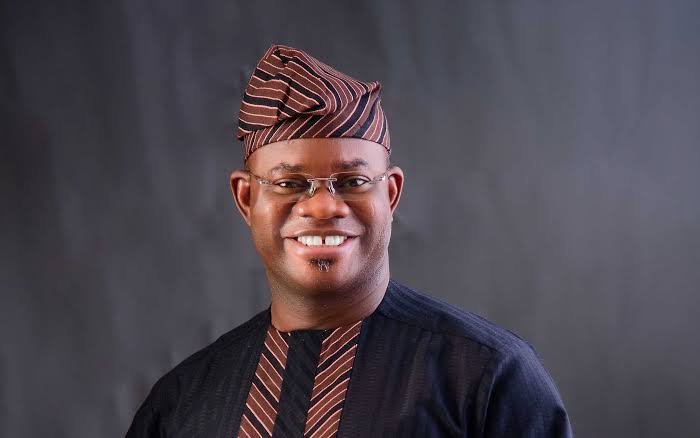
Former Kogi State Governor Yahaya Bello has faced renewed public scrutiny following a tense exchange with Channels Television’s Politics Today presenter, Seun Okinbaloye, who directly challenged him over allegations that he evaded the Economic and Financial Crimes Commission (EFCC) and avoided accountability.
The confrontation came during an interview on Friday, November 20, as Bello defended himself against corruption allegations, insisted he would eventually be vindicated and discussed his ambition to defeat Senator Natasha Akpoti-Uduaghan in the 2027 Kogi Central senatorial election.
The most striking moment came when Okinbaloye challenged the former governor over his past encounters with the anti-graft agency.
“Why are you running away? You are running away from being held accountable,” the presenter asked.
Bello rejected the suggestion that he had fled Nigeria to escape the EFCC, responding that neither immigration officials nor the police had seen him cross the country’s borders.
“I don’t think the Nigerian Immigration or Nigerian Police saw me crossing the borders of this country,” he said.
He went further, arguing that no individual could successfully hide from government authorities.
“You can’t hide away from local government, you can’t hide away from state government. The Federal Government has the power and might to fish out anybody, whatever you are,” Bello said.
The response has attracted attention because of the history surrounding the EFCC’s attempts to arrest him in 2024, when the commission accused the Kogi State Government under his successor, Governor Usman Ododo, of obstructing its operations.
One of the most controversial episodes in Bello’s legal troubles occurred on April 17, 2024, when EFCC operatives moved to arrest him at his Abuja residence.
According to the commission, its officers had obtained a valid arrest warrant and were attempting to execute it when the operation encountered resistance.
The EFCC subsequently accused Governor Usman Ododo of breaching the security cordon around Bello’s residence and removing the former governor in his official vehicle.
The commission said Ododo ensured that Bello was taken away while its operatives exercised restraint.
The incident triggered widespread criticism and questions about whether a sitting governor had used the authority and security resources of his office to shield his predecessor from an anti-corruption investigation.
The EFCC also warned that obstructing its officers from carrying out lawful duties was a criminal offence.
Bello eventually turned himself in at the EFCC headquarters in Abuja on November 26, 2024, before his arraignment the following day.
The episode remains a significant part of the public debate surrounding his relationship with the anti-graft agency.
Bello is facing separate EFCC prosecutions involving allegations of financial misconduct, money laundering and criminal breach of trust during his eight-year administration in Kogi State, which ended in January 2024.
One case involves a 19-count charge relating to alleged money laundering and the handling of approximately ₦80.2 billion.
A separate 16-count charge concerns alleged criminal breach of trust and money laundering involving ₦110.4 billion. The Federal Government alleges that funds belonging to Kogi State were diverted through transactions involving properties in high-value areas of Abuja and Dubai.
The combined value of the sums involved in the two cases is approximately ₦190.6 billion.
The allegations include claims that public funds were used to acquire properties and finance transactions that investigators say were connected to the proceeds of unlawful activities.
Bello has pleaded not guilty and maintains that he will be vindicated.
The EFCC has continued presenting witnesses in the proceedings. In October 2026, a prosecution witness in the ₦110.4 billion case testified about foreign-exchange transactions amounting to ₦1.425 billion over a two-month period.
The commission says the responsibility for determining Bello’s guilt rests with the judiciary.
While the corruption cases continue, Bello is preparing for another major political contest.
The former governor is the APC candidate for Kogi Central in the January 2027 senatorial election, where he will challenge the incumbent senator, Natasha Akpoti-Uduaghan of the PDP.
During the same Channels Television interview, Bello expressed confidence that he would defeat Akpoti-Uduaghan overwhelmingly.
He claimed that his political popularity remained stronger than that of other politicians in Kogi State, insisting that his time away from elective office had increased his support.
The contest is particularly significant given the history of political disagreements between Bello and Akpoti-Uduaghan.
The senator has previously criticised Bello’s political influence in Kogi State, while their supporters have exchanged accusations over political intimidation and the treatment of opponents.
The former governor’s ambition to return to the National Assembly has therefore placed his political record, leadership style and ongoing legal battles under renewed public scrutiny.
For many observers, the central question is whether a politician facing multiple ongoing corruption prosecutions should be seeking another public office while the courts are yet to determine the allegations against him.
Bello’s television appearance has generated strong reactions online, particularly over the contrast between his public appearance and the unresolved EFCC cases.
Some Nigerians questioned why a former governor facing multiple corruption prosecutions could appear on national television to discuss his political ambitions while the cases remain before the courts.
One reaction read:
“How can a thief get a chance to be on national television and not in custody?”
Another commenter questioned Bello’s assertion that the Federal Government had the power to locate anybody, drawing a comparison with the government’s struggle to apprehend armed bandits and kidnappers.
“The Federal Government has the power and might to fish out anybody, whatever you are, but they cannot catch bandits and kidnappers?” the commenter asked.
Another social media user questioned the decision to invite Bello for a television interview, writing:
“I don’t know why they are inviting this kind of criminals to a national TV to talk.”
Other reactions expressed frustration over what they perceived as the confidence with which politicians facing corruption allegations continue to participate in public political activities.
One commenter described the situation as a troubling reflection of the political culture surrounding the APC.
These reactions reflect public anger and questions about accountability, although they do not establish Bello’s guilt in the cases before the courts.
Bello has described himself as Nigeria’s most transparent and most vilified politician, insisting that he will eventually be vindicated.
He also declined to discuss the EFCC investigation in detail, saying he would rather not comment on an ongoing court matter.
However, Okinbaloye’s direct question has brought renewed attention to an issue that has followed the former governor since the EFCC’s attempted arrest in April 2024.
The former governor is now seeking to return to the Senate, where he hopes to unseat an incumbent lawmaker, even as prosecutors continue pursuing cases involving hundreds of billions of naira in alleged financial misconduct.
For Nigerians following the developments, the debate extends beyond the political contest in Kogi Central. It concerns the ability of anti-corruption institutions to investigate powerful politicians, the independence of the judicial process and whether public officeholders can be held accountable regardless of their political influence.
Until the courts reach their decisions, Bello remains entitled to the presumption of innocence. However, his political ambitions have ensured that the questions surrounding his EFCC cases will remain part of the national conversation.