




























By FRONTLINE CHRONICLE
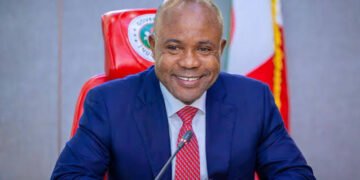
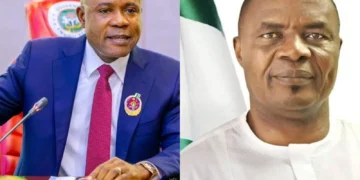
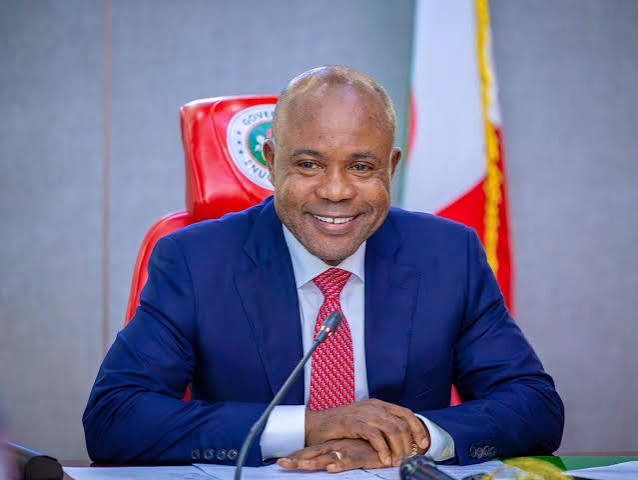
The decision of a Federal High Court in Enugu to uphold the ₦150 million political campaign billboard fee imposed by the Enugu State Structures for Signage and Advertisement Agency (ENSSAA) has sparked public criticism of Governor Peter Mbah’s APC-led administration ahead of the 2027 general elections.
The judgment, delivered by Justice Mabel Segun-Bello on September 1, 2026, dismissed a suit filed by the Labour Party (LP), Nigeria Democratic Congress (NDC) and Social Democratic Party (SDP), which challenged the agency’s authority to impose the fee.
The court ruled that outdoor advertising falls within the regulatory powers that can be exercised by state agencies where authority has been legally delegated. It consequently upheld ENSSAA’s power to impose the charge and rejected the opposition parties’ central challenge.
However, the ruling has not ended public concerns about the financial burden the fee could place on opposition parties seeking to compete with the ruling APC.
Critics have accused the government of creating financial barriers to political participation, arguing that a ₦150 million advertising permit could disadvantage parties with limited resources.
One critic described the policy as an attempt to stifle opposition, warning that restricting political competition would not guarantee electoral victory for the ruling party.
Others questioned why the government was celebrating the judgment without addressing concerns about equal political opportunities, while some argued that opposition parties could reach voters through door-to-door campaigns, community meetings and direct engagement rather than expensive billboards.
Governor Mbah’s membership of the APC has further intensified the political debate, with critics questioning whether the policy could give the incumbent party an advantage over its opponents.
The Enugu State Government, however, has clarified that the ₦150 million fee applies to each political party, not individual candidates. Secretary to the State Government, Professor Chidiebere Onyia, also dismissed social media reports claiming that a Federal High Court in Abuja had nullified the fee.
Other states reportedly operate different campaign advertising fee structures, with charges varying according to the office being contested and the applicable regulations.
Although the court upheld ENSSAA’s legal authority to impose the fee, questions remain about its practical effect on political competition and whether smaller parties can afford the cost of outdoor advertising.
With the 2027 elections approaching, the controversy has placed the Mbah administration under public scrutiny over the balance between regulating outdoor advertising and ensuring fair political participation in Enugu State.