

































Zekeri Idris challenges senator over Obi’s reported $156 million investments, cites former Finance Minister’s account naming Oshiomhole among governors who opposed public savings
By Frontline Chronicle
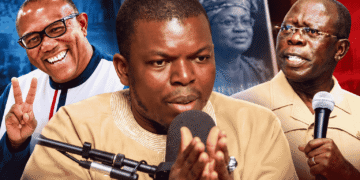
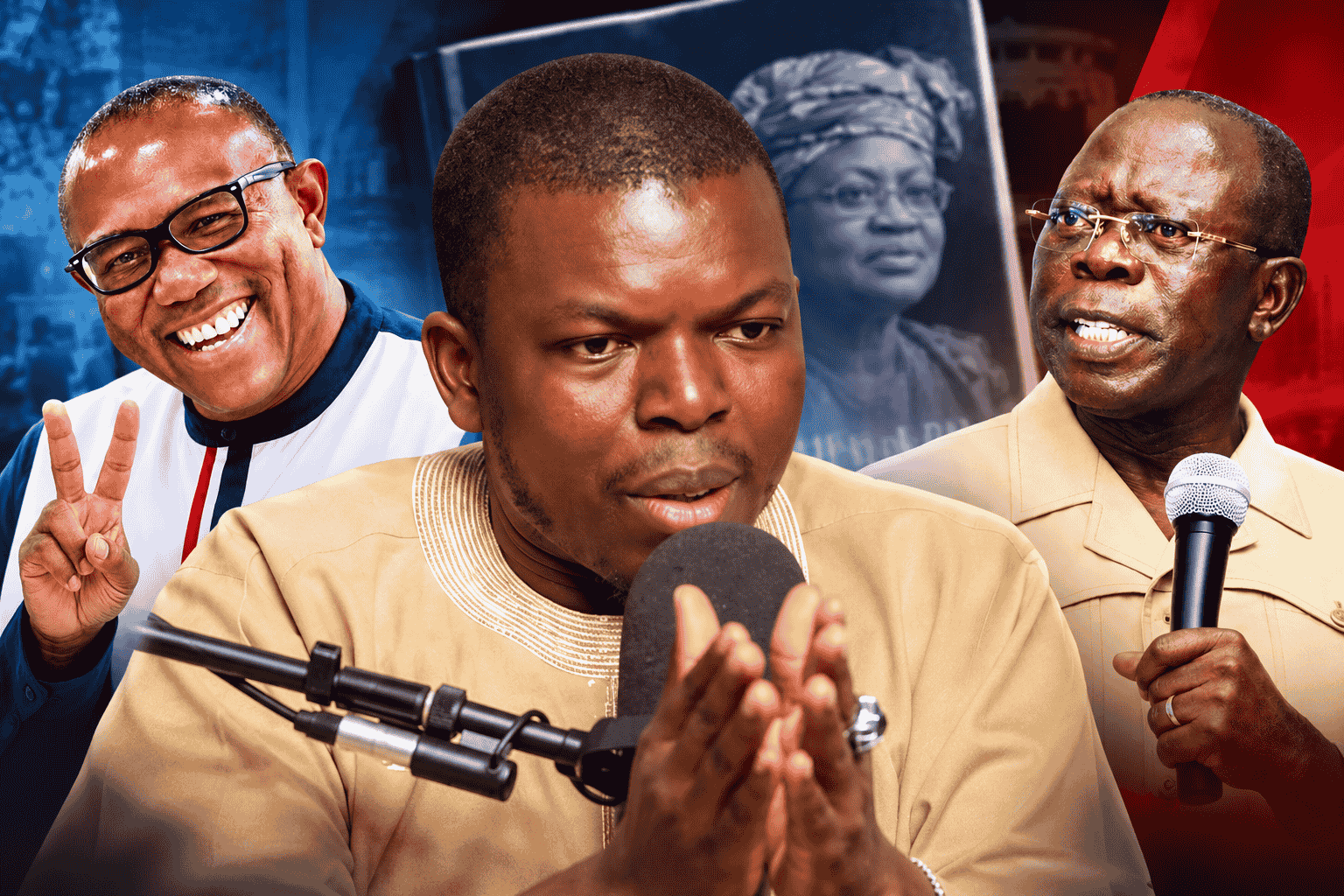
Senator Adams Oshiomhole’s questions about how Peter Obi accumulated millions of dollars in savings have sparked a fresh controversy after the former Anambra governor’s spokesperson, Zekeri Idris Jnr, cited a book by former Finance Minister Ngozi Okonjo-Iweala to challenge the senator’s argument and question the financial decisions of governors who opposed saving public revenue.
Appearing on Naija Unfiltered, hosted by Olawale Oluwade on SYMFONI TV, Idris read from page 61 of Okonjo-Iweala’s book, Fighting Corruption Is Dangerous, which recounts disagreements between the Federal Government and state governors over savings in the Excess Crude Account (ECA).
Oshiomhole had questioned how Obi could have accumulated substantial dollar savings when federal allocations to states are generally paid in naira. Idris dismissed the argument as incomplete, insisting that the history of revenue distribution and investment must be considered.
Reading from the book, Idris cited Okonjo-Iweala’s account that Nigeria saved approximately $9 billion in the Excess Crude Account by the end of 2013, following support from former President Goodluck Jonathan and former Vice President Namadi Sambo.
He then read the passage identifying former Rivers State Governor Rotimi Amaechi as the leading opponent of the savings policy, with Oshiomhole, then governor of Edo State, among those who strongly opposed it.
The book also identified former Lagos State Governor Babatunde Fashola and former Akwa Ibom State Governor Godswill Akpabio among governors who opposed aspects of the arrangement.
In contrast, Obi was described as one of the governors who argued in favour of saving public funds.
Using the account to challenge Oshiomhole’s criticism, Idris said: “Others, such as Governor Peter Obi of Anambra State, argued for savings. But they were not supported. Their voices were drowned out.”
Idris argued that the historical account raised questions about the consistency of those now scrutinising Obi’s financial record after opposing the savings policy during the period in question.
On the origin of the reported dollar holdings, he explained that allocations paid in naira were not the only possible source of funds available for investment.
“Part of the money Peter Obi saved in dollars was from the money shared,” Idris said, referring to distributions associated with the Excess Crude Account. He also cited Eurobond investments as another possible explanation for dollar-denominated assets.
He challenged Obi’s critics to explain what happened to the funds distributed to other states during the same period, arguing that the scrutiny of public finances should apply consistently to all former governors.
Idris further claimed that Obi left approximately $156 million in investments, alongside more than $100 million in World Bank-related facilities, ₦36 billion allegedly held across three locations and another ₦2.3 billion associated with an ecological fund.
He maintained that subsequent administrations drew down the World Bank facilities, arguing that approval of a facility should not automatically be interpreted as money borrowed and spent by Obi’s government.
The spokesperson’s response puts the focus back on the historical debate over public savings and raises questions about the basis of Oshiomhole’s criticism. His central argument is that dollar-denominated investments cannot be judged solely by the currency in which federal allocations were initially paid.
The figures cited by Idris also bring the debate to a more fundamental issue: the need for clear financial records showing how public funds were received, invested and managed across successive administrations.
By reading directly from Okonjo-Iweala’s account, Idris has challenged Oshiomhole to confront the historical record surrounding the savings policy rather than focus exclusively on Obi’s reported dollar holdings.
The controversy now places renewed attention on the financial decisions of former governors and the standard of accountability applied to Nigeria’s political elite.