






























By Frontline Chronicle | Politics | November 24, 2026
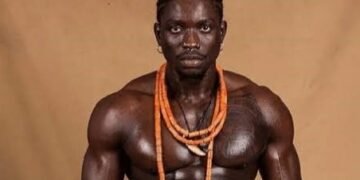
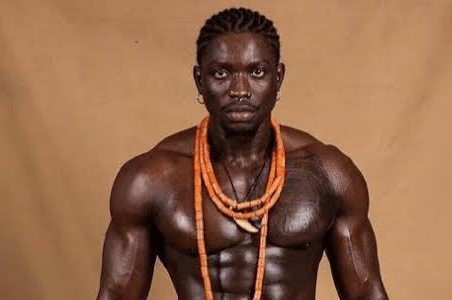
Social media commentator Martins Vincent Otse, popularly known as VeryDarkMan (VDM), has issued a stern warning to President Bola Ahmed Tinubu following the deadly attack on the Nigeria Democratic Congress (NDC) campaign rally in Ughelli, Delta State, accusing the President’s political environment of encouraging violence against opposition supporters.
Reacting to reports that Comrade Akima Efenena Umukoro and three other people were killed when armed men attacked supporters at a campaign rally organised by Senator Ovie Omo-Agege, VDM warned that Nigeria could descend into widespread political violence if the alleged targeting of opposition figures continues.
In a lengthy video, VDM repeatedly addressed Tinubu, warning that a political culture built around hunting down and shooting opposition campaigners would eventually put everyone at risk, including the President’s family.
He specifically mentioned the President’s son, Seyi Tinubu, who is actively involved in political campaigns, warning that he too could become a victim of the violence being encouraged.
According to VDM, political violence does not remain confined to one political camp. He warned that once armed attacks become an accepted feature of political competition, those currently benefiting from the situation could eventually find themselves exposed to the same danger.
“You will burn Nigeria down with this type of politics,” VDM said, repeatedly warning that the country could become uncontrollable if opposition supporters continue to be targeted.
VDM expressed particular concern about the possible consequences of political violence in Delta State and the wider Niger Delta region.
He described Delta as an already divided state, alleging that tensions exist among different ethnic communities, including the Ijaw and Itsekiri, and warning that the situation could easily deteriorate if armed political groups are encouraged to attack opponents.
He further claimed that several influential figures in the Niger Delta have armed supporters and that some groups operating in the creeks are not necessarily under the control of political leaders or authorities.
VDM warned that introducing or encouraging political violence in such an environment could trigger wider communal and regional conflict.
“Don’t start that thing in Delta State. That place is a ticking bomb,” he warned, extending the warning to the wider Niger Delta.
He argued that the attack in Ughelli should be treated as a serious warning rather than another isolated political incident, particularly given the region’s existing tensions.
The commentator also referred to the 2023 general election, recalling threats allegedly made by MC Oluomo against Igbo voters in Lagos who refused to support the All Progressives Congress (APC).
VDM argued that the threats were part of a political atmosphere in which citizens were being intimidated over their voting preferences.
He accused the ruling political establishment of allowing a similar pattern to emerge again, warning that Nigerians should not be forced or threatened into supporting a particular party.
He also recalled political protests and rallies held against former President Goodluck Jonathan in 2015, arguing that the APC was able to organise demonstrations and campaign openly despite strong opposition to its political ambitions.
VDM questioned why opposition supporters should now face arrests, intimidation or violence for expressing political preferences.
He cited instances in which, according to him, Tinubu faced hostile chants during political appearances in Kaduna and at Area 1 in Abuja. He argued that citizens have the right to express dissatisfaction with political leaders and that elections should determine who governs.
“Let the election decide. Let the election decide,” he said.
VDM also broadened his criticism to what he described as growing pressure on opposition politicians to align with the ruling APC.
He alleged that several governors, senators and members of the House of Representatives had been pressured into defecting to the ruling party because of the political consequences they could face if they refused to align.
He further accused the ruling party of making political participation increasingly difficult for opposition groups.
Among his complaints were alleged early campaigning before the period authorised by the Independent National Electoral Commission (INEC), restrictions on opposition campaigns in Abuja and other states, and the high cost of campaign billboards.
VDM claimed that billboard prices had been made expensive to discourage opposition parties from communicating their messages to voters.
He argued that these alleged restrictions, combined with political intimidation and armed attacks, were creating an environment in which opposition parties could struggle to compete freely.
He also questioned why political actors would resort to such measures when the democratic process should allow voters to make their own decisions.
VDM reserved some of his strongest words for Nigeria’s security leadership.
He directly addressed the service chiefs, the Inspector-General of Police, the Director-General of the Department of State Services (DSS), the National Security Adviser and other security officials.
Although acknowledging that President Tinubu appointed the country’s security chiefs, VDM insisted that their loyalty must be to Nigeria and its citizens, not simply to the political authority that appointed them.
“Tinubu is not bigger than the country. The will of the people is bigger,” he said.
He urged the military and security agencies to follow the law, protect political participants and prevent the use of armed groups to intimidate opposition supporters.
VDM also warned security officials against allowing political pressure to influence their professional responsibilities, insisting that the people must be allowed to decide their leaders through the ballot.
In one of the most direct parts of his address, VDM accused Tinubu of desperation and claimed that the President was unconcerned about the consequences of the political approach he was criticising.
He warned that a strategy built around intimidating opposition figures could eventually slip beyond the control of those allegedly encouraging it.
He returned repeatedly to the possibility that violence could turn against people who currently feel protected by political power, again mentioning Seyi Tinubu and other politically active members of the President’s family.
VDM’s central warning was that nobody should assume they would remain safe if political violence becomes normalised.
The attack in Ughelli, which reportedly left four people dead and 15 others critically injured, has intensified concerns over the safety of political supporters ahead of the 2027 general election.
For VDM, the incident represents a dangerous direction for Nigeria’s democracy. He called on President Tinubu, political leaders and security agencies to act before political rivalry turns into a wider security crisis.
His message to the President and the security establishment was direct: stop the intimidation, protect political participation and allow Nigerians to decide their leaders through elections.