





























WTO chief says she faced threats and a five-day ordeal after refusing to approve fraudulent payments, recalls father’s advice not to surrender to blackmail
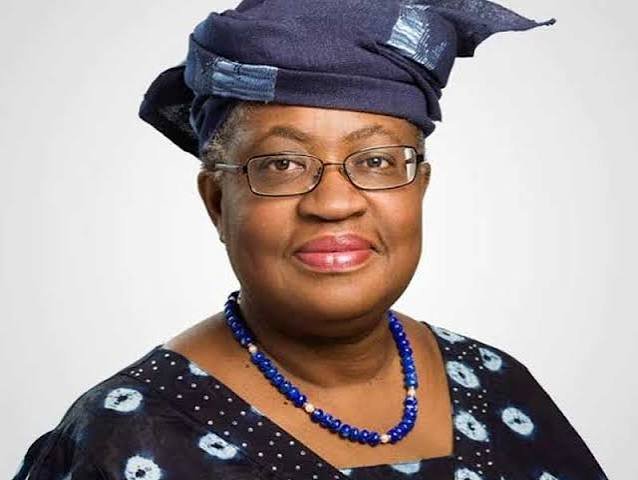
World Trade Organisation (WTO) Director-General Ngozi Okonjo-Iweala has recounted how her fight against corruption in Nigeria’s petroleum subsidy programme exposed her to threats and led to the kidnapping of her mother, describing the incident as one of the most traumatic experiences of her life.
In an interview with Bloomberg Television anchor Francine Lacqua for the series Leaders with Francine Lacqua, Okonjo-Iweala disclosed that an audit of Nigeria’s fuel subsidy programme uncovered approximately $2.4 billion in fraud, prompting her to refuse payments to claimants whose demands could not be verified.
The interview, conducted at the WTO headquarters in Geneva, Switzerland, was released in October 2026. It examined her experiences confronting corruption in Nigeria, the personal risks associated with public service, and the challenges facing international trade.
Recalling her time as Nigeria’s finance minister, Okonjo-Iweala explained that the government’s fuel subsidy programme was intended to make petroleum products more affordable to Nigerians, despite the country’s inability to refine all the fuel it consumed.
Under the arrangement, importers brought refined petroleum products into Nigeria and received government subsidies to cover the difference between the import costs and the regulated pump price.
However, she said the amounts claimed by importers began rising sharply, raising concerns about possible fraud.
“We noticed that the amounts were just skyrocketing. It just didn’t seem normal,” she told Lacqua.
Okonjo-Iweala said she approached the president at the time to request an audit of the accounts after suspecting that something was wrong with the programme.
Following the audit, she said investigators uncovered approximately $2.4 billion in fraudulent claims.
“So I went to the president and said, ‘Look, something is going on here. Could we audit the accounts?’ And he said, ‘Yes, go ahead.’ And we found about $2.4 billion worth of fraud. So we refused to pay,” she recalled.
Her refusal to approve questionable payments, however, came at a significant personal cost.
According to the former finance minister, the decision triggered threats against her, followed by the kidnapping of her mother, an ordeal that forced her to confront the possibility of losing a close family member because of her work in government.
She said her mother’s abductors demanded that she resign from office and leave Nigeria in exchange for her release.
“I was told that for her to be released, I should resign and leave the country,” she said.
Okonjo-Iweala described the five-day ordeal as one of the worst experiences of her life, explaining that the thought that her anti-corruption efforts could lead to her mother’s death left her emotionally devastated.
“When you feel that what you’re doing might lead to the death of your own parent, that is not a situation that anyone ever wants to be in,” she said.
She disclosed that her mother was held in a forest before escaping one night. Her mother, who is now 96, survived the ordeal but continues to experience emotional distress whenever the incident is discussed.
“She’s still alive. She’s 96 now. You can’t talk about it. If you mention it, she just starts shaking immediately,” Okonjo-Iweala said.
The WTO chief admitted that she considered abandoning her position during the crisis, saying she would always choose her mother’s life over any government appointment.
“Between my mother, having my mother alive and staying in a job, I will pick my mother any day,” she said.
However, her father urged her not to surrender to the kidnappers’ demands, insisting that she should continue her official duties rather than allow threats and blackmail to dictate her decisions.
She recalled how difficult it was to return to work while her mother remained in captivity, saying fear had left her almost paralysed.
Her father, however, remained firm in his position.
“He said, ‘We don’t give in to blackmail. We don’t.’ And he said, ‘You’ve got to carry on. You’ve got to go to work,'” she recalled.
Okonjo-Iweala said her father’s counsel ultimately influenced her decision to continue her duties, even as she struggled with the emotional burden of the situation.
During the interview, archival television footage also revisited the kidnapping and her public statements on the government’s refusal to pay subsidy claims that had not been properly verified.
In one of the recordings, she maintained that the government would only pay petroleum marketers whose claims had been verified.
“In the case of payment for oil subsidy money, we have been paying marketers who have been verified. If they are not verified, then we will not be able to pay. And that position continues,” she said in the archival footage.
Reflecting on the incident, Okonjo-Iweala said she had never imagined that her parents could become targets of such violence.
“I never dreamt my parents could ever be touched in this way, that people would be that evil,” she said, adding that she still experiences a degree of guilt when she thinks about what her family endured.
Despite the trauma, she said her experiences have strengthened her ability to confront difficult situations, exercise patience and focus on finding solutions.
She also acknowledged that growing older had changed her perspective, helping her become stronger and wiser through the challenges she had faced.
“My mind always goes to what the solution is and where the next opportunity is,” she said.
Her account offers a personal perspective on the risks associated with confronting corruption in Nigeria, particularly when powerful financial interests are threatened by efforts to scrutinise public spending.
It also raises broader questions about the protection of public officials and their families when government decisions challenge entrenched financial interests.
For Okonjo-Iweala, however, the experience remains a painful reminder of the personal consequences of taking a stand against corruption, even when the objective is to protect public funds.









Comments 1