





























By Frontline Chronicle | Politics | November 19, 2026
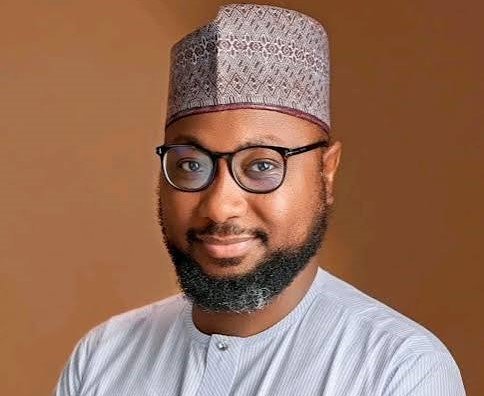
Ibrahim Abdulkarim, Director-General of the Nigeria Democratic Congress (NDC) National Campaign Council, has described some politicians in the African Democratic Congress (ADC) as “lazy politicians”, accusing them of failing to establish clear terms for their proposed opposition coalition ahead of the 2027 general elections.
Abdulkarim made the remarks during an interview on ARISE NEWS, where he defended the political arrangement involving NDC presidential candidate Peter Obi and former Kano State Governor Rabiu Musa Kwankwaso.
He argued that opposition politicians should have agreed on key issues, including the presidential candidate, power-sharing arrangements and the structure of their proposed coalition before inviting other political figures to join.
According to him, the absence of clear agreements has created unnecessary disagreements over who should lead the opposition.
“Some of the people I see in ADC as lazy politicians,” Abdulkarim said.
He argued that the coalition’s organisers should have followed a more structured approach, putting their intentions and agreements in writing so that every participant would understand the arrangement before joining.
“Everybody that is coming into that coalition knows exactly why he’s coming, so it’s not going to be any problem in trying to see who becomes what,” he said.
Abdulkarim questioned why discussions about the proposed opposition coalition quickly turned into arguments over political positions, particularly suggestions that Peter Obi should become former Vice-President Atiku Abubakar’s running mate.
“Immediately we started, they started saying Peter Obi is a vice-presidential candidate to Atiku. So what kind of coalition is that?” he asked.
His comments reflect the disagreement between opposition figures over the platform, leadership and presidential ticket around which a broader coalition should be organised.
Abdulkarim has previously argued that opposition cooperation does not have to take place under the ADC, insisting that the NDC could provide a platform for such an arrangement.
During an earlier ARISE NEWS interview, he invited Atiku and other opposition politicians to join the alliance involving Obi and Kwankwaso.
The NDC campaign chief also criticised what he described as a sense of entitlement among some Northern political elites, particularly those who invoke regional identity when seeking political support.
He questioned the assumption that political leaders could simply appeal to the North and expect everyone in the region to support their ambitions.
“The entitlement from the elite, I find it very, very annoying sometimes. You just decide the North. Which North?” he said.
Abdulkarim argued that no individual politician, including Atiku, had an automatic right to demand that other opposition figures surrender their ambitions.
“There is no right given to Atiku, for example, to say everybody must surrender,” he added.
He maintained that political alliances should be based on agreed principles, mutual understanding and the ability of candidates to appeal to Nigerians across ethnic, religious and regional boundaries.
Abdulkarim’s criticism became more pointed when he addressed the history of political leadership in Northern Nigeria.
He questioned why some political elites continued to rely on regional loyalty despite the challenges facing communities across the North.
He referenced the administrations of former military ruler General Ibrahim Babangida and former President Muhammadu Buhari, arguing that Northern political leaders had occupied positions of national power for extended periods without delivering the improvements many communities needed.
“We’ve been ruling from IBB to Buhari. We’ve been there. But look at where we are. Go and see our streets. Go and see our villages. Look at how we have been ravaged,” he said.
He argued that political leaders should be judged by their records and ability to improve people’s lives rather than their ethnic or religious identities.
According to him, Nigerians should prioritise integrity, accountability and the responsible management of public resources when deciding who should lead the country.
He said the country needed leaders who could be questioned and held accountable when public funds were not used for the benefit of citizens.
Abdulkarim also defended Kwankwaso’s decision to work with Obi, pointing to the former Kano governor’s electoral experience and his right to choose his political partners.
He referenced Kwankwaso’s performance in the 2023 presidential election, when he contested under the New Nigeria Peoples Party (NNPP), arguing that his political support base gave him a legitimate role in determining the direction of his next political move.
The NDC campaign chief said Kwankwaso had chosen to work with Obi after considering his character and political qualities.
He also recalled Kwankwaso’s reported expression of regret that he had not accepted Obi’s offer to be his running mate in the 2023 election.
For Abdulkarim, the partnership demonstrates that political cooperation should be built around mutual respect rather than assumptions that one region or political figure must automatically dominate an alliance.
Abdulkarim concluded by arguing that Nigeria needs leaders who can manage public resources responsibly and answer questions about their decisions.
He said the country should move beyond political calculations based on ethnicity, religion and regional entitlement.
“We want somebody, irrespective of where he’s coming from, irrespective of religion or tribe, somebody that we know has this integrity, somebody that can make these public funds to be used for public good, somebody that can be accountable,” he said.
He also criticised what he described as political elites who were inaccessible to ordinary Nigerians and unwilling to engage with younger people.
His remarks come as opposition parties and political figures continue to position themselves ahead of the 2027 general elections, with coalition negotiations, presidential ambitions and regional political influence remaining central issues.
The disagreement over whether opposition cooperation should take place under the ADC or another platform reflects the wider challenge of bringing competing political interests together under a common arrangement.
Abdulkarim’s intervention makes clear that the NDC leadership wants any proposed alliance to begin with an agreed political direction, a clearly defined leadership structure and a presidential ticket accepted by its participants.