


























LAGOS, NIGERIA | November 1, 2026 | Frontline Chronicle
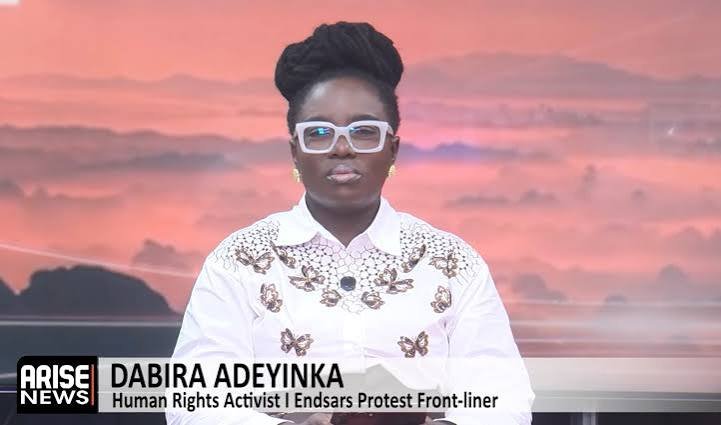
Six years after the October 20, 2020, Lekki Toll Gate shooting, human rights activist Dabira Adeyinka has revisited the terrifying night she says a stranger saved her life by shielding her from gunfire, losing his own life in the process.
In an emotional account shared during an appearance on The Briefing Room, Adeyinka recalled standing on stage with a microphone as soldiers approached the peaceful #EndSARS protesters. She said she had been encouraging demonstrators to remain calm, raise Nigerian flags and sing the national anthem.
According to her, the idea followed a suggestion by a former military officer who advised protesters to display the national flag and sing the anthem, believing that the symbols would command the respect of uniformed personnel.
But the atmosphere changed when gunshots rang out.
“I saw people running, and they started shooting. They started shooting while I was still holding the microphone. I saw people falling,” she recounted.
Adeyinka said she repeatedly urged protesters not to run but to sit down, raise their flags and continue singing, hoping the soldiers would recognise that the crowd was unarmed.
She recalled that hundreds of protesters eventually sat down as the shooting continued and soldiers moved closer.
Then, she said, soldiers pointed towards her.
“I didn’t believe I was surviving,” she said, describing the moment she thought she would be killed.
In the most heartbreaking part of her testimony, Adeyinka recounted how an unidentified man suddenly rose from among the seated protesters, grabbed her and pulled her away from danger.
According to her, the man shielded her from the gunfire and was fatally shot.
“He dragged me, held me and took the bullet and died,” she recalled.
Adeyinka’s account echoes her earlier testimony about the events of that night. In February 2021, she gave evidence before the Lagos State Judicial Panel of Inquiry, describing her presence on stage with DJ Switch and her efforts to manage the crowd during the shooting.
The incident remains one of the most painful episodes in Nigeria’s recent history. On October 20, 2020, soldiers were deployed to the Lekki Toll Gate, where young Nigerians had gathered to protest against police brutality and demand an end to the now-disbanded Special Anti-Robbery Squad (SARS).
In November 2021, the Lagos State Judicial Panel of Inquiry concluded that soldiers shot, injured and killed unarmed protesters. The panel described the incident as one that could be characterised as a massacre.
Its report listed nine confirmed deaths and four people presumed dead, while documenting other protesters who sustained gunshot injuries or were assaulted. It also recommended sanctions against security personnel involved and compensation-related measures for victims.
Six years later, Adeyinka’s account brings renewed attention to the human cost of that night and the unanswered questions surrounding the victims, their families and the demand for accountability.
For her, the memory is deeply personal: she says she survived because a man she did not identify stepped forward and took the bullet meant for her.
His name may remain unknown to the public, but his reported sacrifice remains part of her account of the night Nigeria will not forget.