

























By Frontline Chronicle | Politics | November 16, 2026
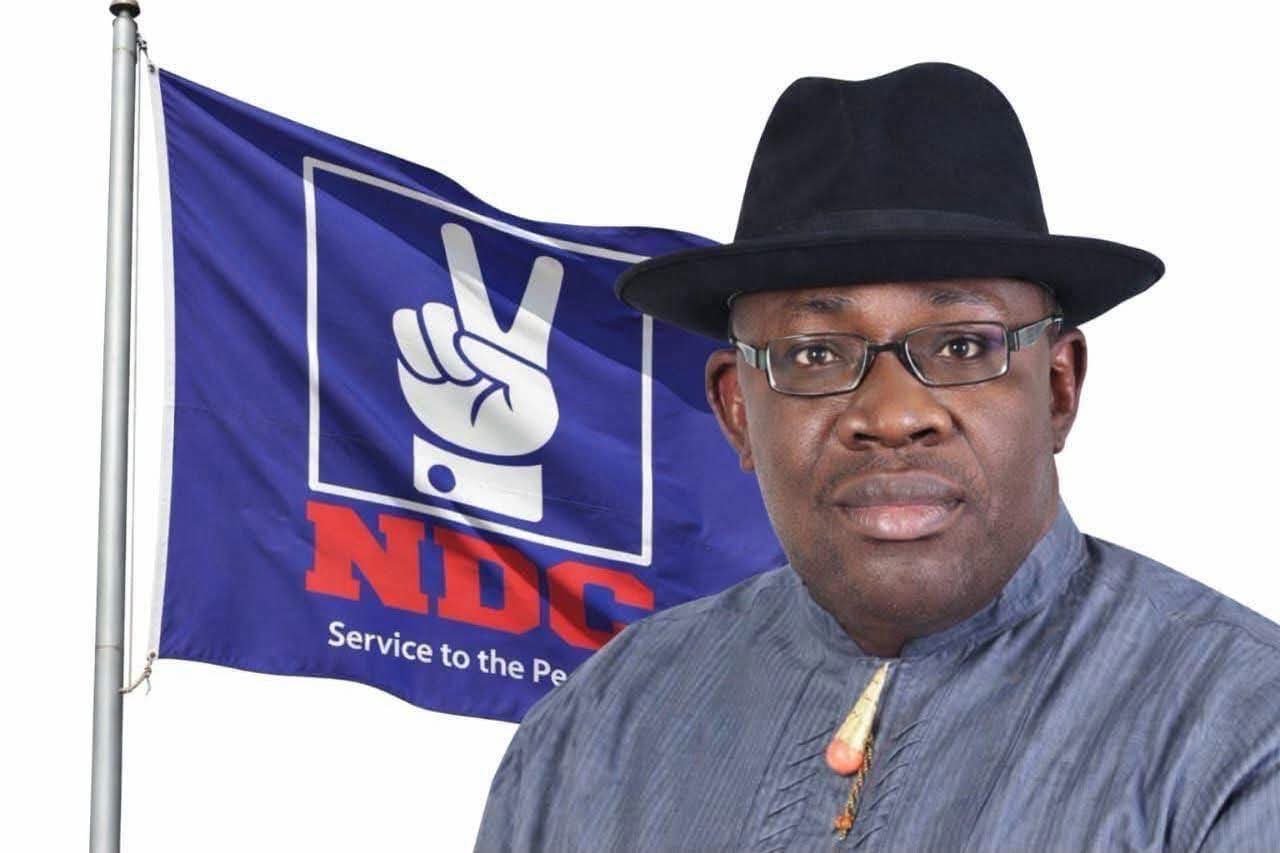
Senator Henry Seriake Dickson has called for an emergency all-party summit to address growing incidents of political violence ahead of Nigeria’s 2027 general elections, warning that attacks against members and supporters of the Nigeria Democratic Congress (NDC) could undermine the country’s democratic process.
Dickson made the appeal in a statement published on November 15, expressing concern over what he described as increasing attacks targeting the NDC, its candidates and supporters.
He urged the Inter-Party Advisory Council (IPAC), the General Abdulsalami Abubakar-led National Peace Committee, the Independent National Electoral Commission (INEC) and security agencies to urgently convene a meeting involving political parties to address the situation.
According to him, the proposed summit would provide an opportunity for political stakeholders to reaffirm their commitment to peaceful, fair and transparent elections.
“Whatever the circumstances, violence has no place in our democratic process,” Dickson stated.
He warned that if the growing incidents of political violence were not urgently addressed, they could create a dangerous political environment capable of complicating or undermining the conduct of the 2027 elections.
The senator said he and other party leaders had previously spoken against attacks on political gatherings, insisting that political disagreements and rivalries must not degenerate into violence.
He maintained that every political party and candidate should be allowed to participate in the electoral process without intimidation or physical attacks.
His intervention comes amid a series of reported disruptions and attacks involving opposition political activities in different parts of the country.
The NDC and its supporters have raised concerns about the safety of their meetings, campaign activities and political mobilisation efforts as preparations for the 2027 elections intensify.
Dickson’s proposed summit is aimed at bringing political parties and relevant institutions together before the situation deteriorates further.
Reacting to Dickson’s proposal, some Nigerians argued that the proposed summit should address more than political violence.
One of the responses called on IPAC, INEC and the Peace Committee to include alleged irregularities in the voters’ register among the issues requiring urgent attention.
Nigerians specifically demanded an independent audit of the voters’ register, arguing that electoral credibility depends on ensuring that the register accurately reflects eligible voters.
The reaction raises an important question about the integrity of the electoral process: how can Nigerians have confidence in an election if concerns about voter registration, verification and the accuracy of the voters’ register are not adequately addressed?
The proposed summit could therefore provide an opportunity to discuss electoral transparency, voter registration, the protection of polling units and the security of political campaigns.
Other reactions reflected the frustration and anxiety surrounding reported attacks on opposition supporters.
One commenter declared that opposition supporters were not afraid of attacks, arguing that political participation would require sacrifices to secure credible elections.
Another reaction adopted a more confrontational position, accusing President Bola Ahmed Tinubu of relying on intimidation and electoral manipulation to retain political power.
The commenter described the president as a “kleptocrat” rather than a democrat and argued that the opposition should prepare for the challenges ahead.
The reaction also questioned the effectiveness of political peace agreements, suggesting that signing peace accords would mean little without practical enforcement.
These comments reflect the anger and distrust among some opposition supporters. However, calls for political preparedness must not become encouragement for armed confrontation or retaliation. The responsibility for protecting political participants rests with the security agencies, while political parties must ensure that their supporters operate within the law.
Beyond the issue of political violence, Dickson also addressed internal concerns reportedly raised by some party officers.
He disclosed that he had held discussions with various party leaders and asked them to ensure that the concerns were properly addressed, with the interests of all stakeholders taken into consideration.
He also said arrangements were being made to release the names of committed party members for assignments within the committees and directorates of the NDC National Campaign Council.
According to him, he had spoken with the party’s executive leadership to accelerate the process and ensure that the lists were released without unnecessary delay.
Dickson further disclosed that he had asked the party leadership to provide financial and organisational support to state chapters to strengthen their activities while efforts continued to raise additional campaign funds.
The senator also emphasised the importance of preparing party agents ahead of the 2027 elections, describing the election as one that would depend heavily on effective polling unit representation.
He urged NDC candidates contesting for the National Assembly, state Houses of Assembly and governorship positions to take the identification, verification and training of polling agents seriously.
Dickson said candidates should have significant input in selecting and preparing agents because they would be on the ballot and would have a direct responsibility to defend the party’s interests during the electoral process.
He also called for cooperation between the presidential campaign team, candidates and party leadership to ensure proper coordination.
He encouraged collaboration with other political parties, where necessary, to strengthen agent presence across polling units, while excluding the party’s main political contenders from such arrangements.
Dickson said the process should be concluded quickly and decentralised to allow the agents’ lists to be uploaded and training to begin later in November and continue throughout December.
Dickson’s appeal comes at a time when concerns about political violence, electoral transparency and opposition participation are becoming increasingly prominent in Nigeria’s political discussions.
An all-party summit could provide an important platform for addressing these concerns, but Nigerians will expect more than another declaration of commitment to peaceful elections.
INEC must address legitimate concerns about the voters’ register and electoral procedures. Security agencies must investigate reported attacks and prosecute those responsible where evidence supports criminal charges. Political parties must also demonstrate that they can control their supporters and reject intimidation.
The credibility of the 2027 elections will depend on whether Nigerians can campaign freely, register and verify their voting details, cast their ballots without fear and trust that their votes will count.
Dickson has called for political leaders and institutions to act before the situation deteriorates. The question now is whether IPAC, INEC, the National Peace Committee and the security agencies will respond with a coordinated plan capable of restoring public confidence.
As Nigerians increasingly demand credible elections, the country cannot afford to treat political violence and electoral irregularities as separate concerns. Both strike at the foundation of public trust in democracy.