




































Frontline Chronicle | Politics
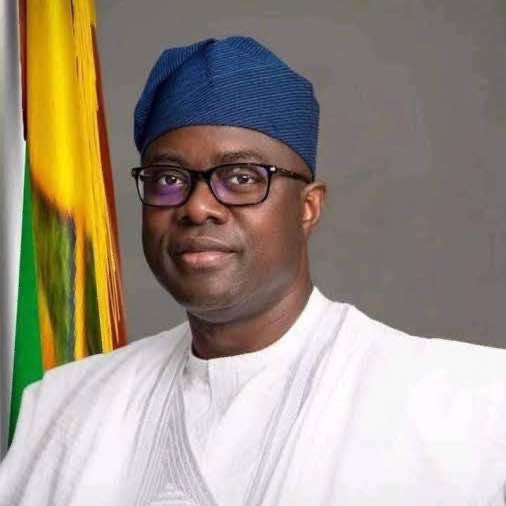
If Nigeria’s 2027 presidential election comes down to who can jump off a stage, Oyo State Governor and African People’s Movement (APM) presidential candidate Seyi Makinde has thrown down the gauntlet—and possibly given his political rivals something to worry about.
At the APM South-West town hall in Akure, Ondo State, Makinde declared that although he would not make age an issue in the campaign, he would make energy one.
“While I will not make age an issue of this campaign, I will make energy. Having energy, being able to stay up late, having the rigour, having the energy to deal with the challenges we are faced with as a country,” Makinde told the audience.
Then came the challenge.
“So please, when they bring their own presidential candidate, let the candidate also come here and jump down.”
Having issued the challenge, Makinde promptly jumped off the stage himself, turning his speech into a live demonstration of what he meant.
He then delivered the punchline: “If they can do that, vote for them.”
In one move, the governor transformed a political town hall into a presidential audition where candidates might soon need more than manifestos, campaign posters and well-rehearsed speeches. Apparently, a little athletic performance could also be required.
Makinde did not mention President Bola Ahmed Tinubu by name in the quoted remarks. However, his deliberate reference to age, followed by his emphasis on stamina and the physical demands of the presidency, is likely to fuel comparisons with the incumbent, whose age has remained part of public political debate.
Tinubu, born on March 29, 1952, is 74 years old. Makinde, born on December 25, 1967, is 58. While age alone does not determine a leader’s capacity to govern, Makinde’s remarks have put the question of energy and the demands of the presidency squarely into the campaign conversation.
The challenge also raises an amusing question: Will presidential contenders now have to prove their fitness by jumping off stages before Nigerians can trust them with the nation’s problems? And if a candidate refuses to jump, does that automatically disqualify them—or do we need a medical report, a campaign manifesto and a landing assessment first?
Behind the humour, however, lies a serious issue. Nigeria’s presidency demands sustained attention, long working hours, sound judgement and the ability to respond to national emergencies. Voters have every reason to examine candidates’ capacity to meet those demands, alongside their policies, records and plans for the country.
Makinde is campaigning under the APM’s “Reset Nigeria” agenda as the 2027 election approaches. The party is also reportedly facing internal tensions, including a vote of no confidence by some South-South party leaders.
For now, Makinde has made his position clear: he will not campaign on age, but he wants energy to be part of the test.
And somewhere in Nigeria’s political corridors, the message may have landed: the next presidential debate might need a stage, a microphone—and enough room for everyone to jump down.