






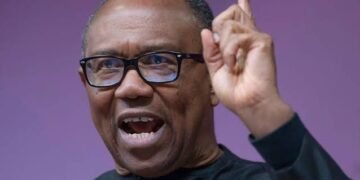









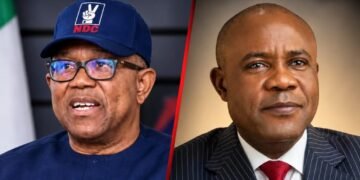















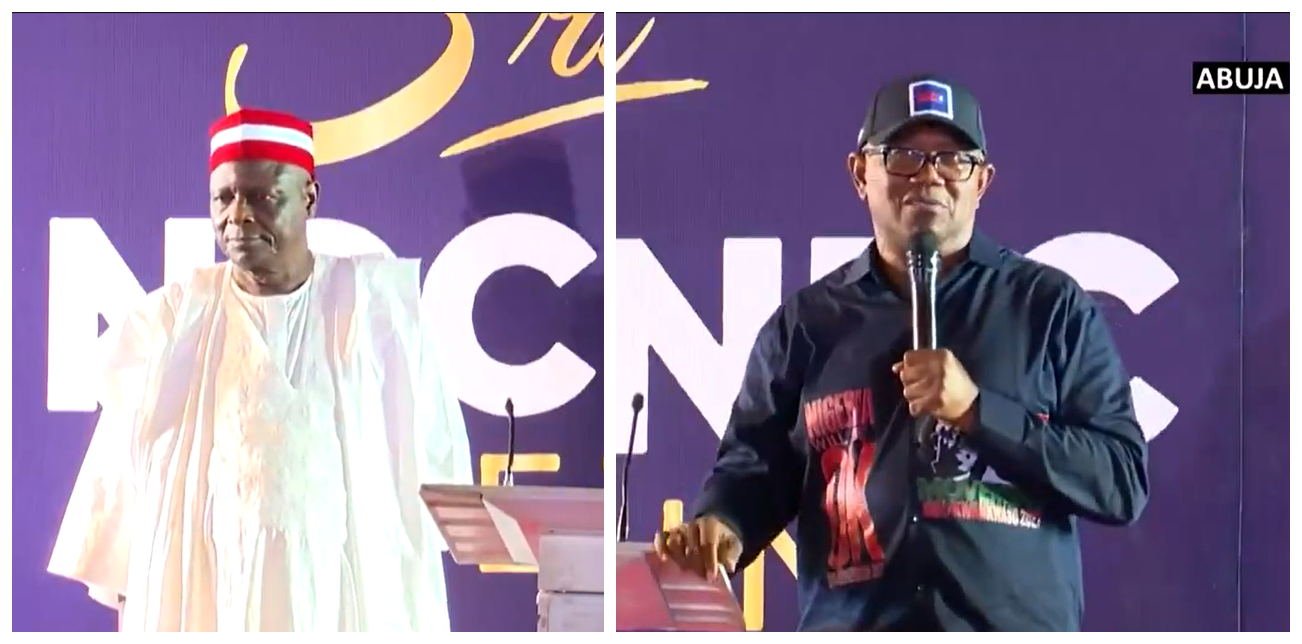
ABUJA, Nigeria | Labouring under the weight of insecurity, economic hardship and growing public frustration, former Anambra State Governor and Nigeria Democratic Congress (NDC) presidential candidate Peter Obi has promised to take his campaign to every part of Nigeria, declaring that a president must be present when the people need him most.
Speaking at an Abuja event where certificates of return were presented to NDC candidates, Obi called on competent, energetic and committed Nigerians to step forward and campaign on ideas, insisting that the country could no longer afford leaders who disappear from public view after winning elections.
His address carried a central message: leadership must mean presence, especially in communities devastated by violence, where families are grieving, livelihoods have been destroyed and citizens are desperate for reassurance that their country has not abandoned them.
“I will go to every state. I will campaign in every senatorial zone because we are Nigerians, and we want to be everywhere to tell Nigerians what is happening,” Obi said.
He insisted that the coming election must be about ideas and the ability to serve, rather than political connections or the privileges that come with public office.
“If you have the competence to serve, you come and campaign. If you have the energy to serve, you come and campaign. We cannot take it when people are elected but unavailable,” he declared.
Obi argued that Nigeria needs a president who remains accessible to citizens and is willing to travel across the country to understand their struggles firsthand.
“The President of Nigeria must be available at all times. I must tour all over Nigeria,” he said.
He questioned President Bola Tinubu’s travel and residence patterns, alleging that the president had not spent a night in several states, including Bayelsa, Anambra and Enugu.
Recalling his time as governor of Anambra State, Obi said former President Olusegun Obasanjo had spent four days in the state.
The comparison formed part of his argument that national leadership should involve direct engagement with communities rather than governing from a distance.
For Obi, the question of where a president spends time is inseparable from the question of whose suffering receives attention. In a country where insecurity has forced families from their homes and left communities uncertain about tomorrow, he argued that the nation’s leader should be willing to go where the pain is greatest.
One of the most striking moments of Obi’s address came when he spoke about spending his holidays in communities affected by violence rather than travelling abroad for leisure.
“Who would take a holiday in Nigeria? All my days will be in Nigeria. I will not leave this country any day,” he said.
He went on to name Jos, Benue, Zamfara, Sokoto and Maiduguri as places where he would want to spend his holidays, referring to the security challenges confronting parts of the country.
“I want to take a holiday in Jos, where they are killing people. I want to go to Benue, where they are killing people, and take a holiday. My holidays will be in Zamfara, Sokoto and Maiduguri. That is where we need to go to holidays,” Obi said.
He argued that a leader should not withdraw from a community because it is experiencing violence or instability.
“You cannot run away when there is trouble in your place. We must confront that trouble and those who think they can terrorise the country,” he declared.
He then assured supporters that his approach to leadership would be different, adding: “Wait, we are coming. It will be a different thing; we have a country to build.”
The remarks placed insecurity at the centre of his message, presenting physical presence and direct engagement as important responsibilities of national leadership.
For families living with the fear of attacks, the loss of loved ones or the uncertainty of displacement, the promise of a leader who is willing to visit troubled communities carries a powerful emotional message. Yet the ultimate test of such a promise would be whether it translates into effective security measures, protection for vulnerable communities and lasting peace.
Beyond security, Obi addressed the country’s economic difficulties, promising that an NDC-led administration would work to reduce the cost of living.
“We will ensure that we drive down the cost of living in Nigeria,” he said.
He also challenged supporters to take the party’s message to Nigerians, arguing that the country’s future depends on creating a society where opportunity is not reserved for people with influential connections.
“We must create a society where a child of nobody will be somebody without knowing anybody,” Obi said.
He described the existing situation as an abuse that must end and urged Nigerians to join the effort to change it.
“Please join us today, let’s stop this abuse because the Nigeria we are building today is taking revenge on us and our children,” he said.
The statement delivered one of the speech’s strongest messages: that the consequences of today’s political and economic decisions will extend beyond the present generation.
For parents worried about school fees, young people struggling to find jobs and families watching the prices of food and essential goods rise, the question of what kind of country their children will inherit remains deeply personal.
Obi’s appeal suggested that the task of rebuilding Nigeria must begin with decisions that expand opportunity, reduce hardship and make public institutions more responsive to ordinary citizens.
During the address, members of the audience broke into chants of “Obi-Kwankwaso,” repeatedly calling the names of Peter Obi and Senator Rabiu Musa Kwankwaso.
The chants reflected the enthusiasm of supporters gathered at the event, where NDC candidates received their certificates of return.
Obi used the occasion to urge those candidates and other party members to take responsibility for communicating their ideas to voters.
His message was direct: competence, energy and commitment must be demonstrated through active participation in the campaign and a willingness to engage Nigerians across the country.
Obi is serving as the NDC’s presidential candidate and co-chair of its 2027 campaign council.
Obi’s address offered a vision of leadership centred on accessibility, national engagement, security and economic relief.
His promise to visit every state and spend time in communities facing violence placed the experiences of ordinary Nigerians at the heart of his argument.
But the challenges facing the country will require more than visits and speeches. Nigerians will also expect clear plans for protecting lives, restoring peace, reducing the cost of living and creating opportunities for young people.
The emotional force of Obi’s message rested on a simple proposition: no community should feel abandoned by its president, and no child should have to depend on personal connections to build a future.
As political activities gather momentum ahead of the 2027 elections, his remarks add to the debate over what Nigerians should expect from those seeking the nation’s highest office.
For Obi, the task ahead is to convince voters that a different approach to leadership is possible.
For Nigerians listening to promises of change, the ultimate measure will be whether those promises can deliver a country where people feel safe in their homes, families can afford basic necessities and every child has a fair chance to succeed.