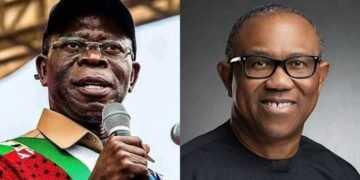













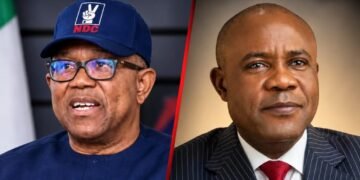















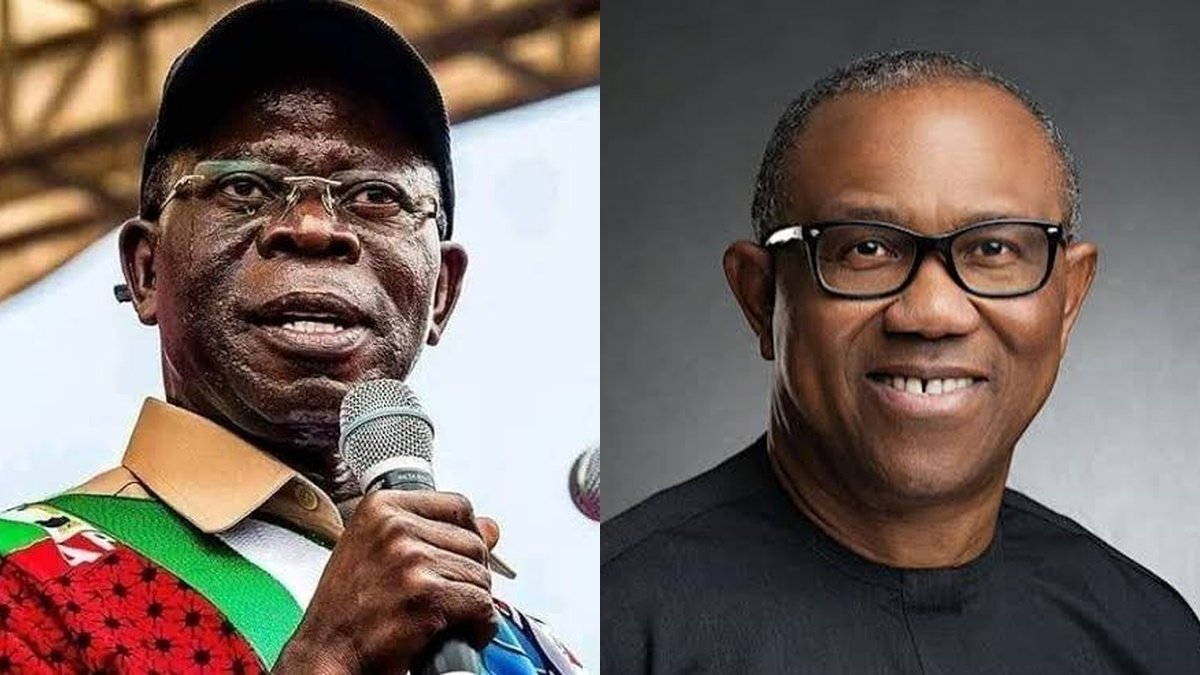
Senator Adams Oshiomhole’s description of Peter Obi as a trader whose thinking revolves around short-term turnover has raised questions about the quality of political debate Nigerians should expect ahead of the 2027 presidential election.
Speaking on Channels Television’s Politics Today on November 5, Oshiomhole argued that Obi had failed to present an alternative to President Bola Ahmed Tinubu’s policies. He contrasted what he described as a trader’s short-term outlook with the long-term vision of a statesman, which he attributed to Tinubu.
But there is a fundamental problem with this argument: a candidate’s professional background does not answer questions about the quality of his policies, just as describing a president as a statesman does not establish the success of his administration.
Oshiomhole is entitled to challenge Obi’s economic proposals, question his positions and demand detailed explanations. Those are legitimate issues in an election campaign. However, reducing a political opponent to the label of a trader does little to advance that debate.
More importantly, the claim that Obi has offered no alternative deserves scrutiny. Obi’s 2023 presidential manifesto, titled Our Pact with Nigerians, outlined proposals covering national security, production, institutional reforms, infrastructure, human capital development and foreign policy. Whether those proposals were sufficient, realistic or capable of implementation is open to debate. But claiming that no alternative exists overlooks a documented policy programme.
Oshiomhole also questioned whether Obi would abolish the student loan scheme and return Nigeria to multiple exchange rates. These are legitimate questions that deserve direct answers. However, Nigerians should equally be able to ask the ruling party to account for the outcomes of the policies it has introduced.
The debate over economic reforms cannot end with the announcement of policy decisions. Nigerians want to know how those decisions have affected household incomes, food prices, employment, businesses and the cost of living. They deserve clear figures, measurable targets and transparent explanations of what has worked and what has not.
Oshiomhole defended the Tinubu administration’s economic direction, including the unification of exchange rates and the temporary transport allowance for workers. But defending these decisions should come with a responsibility to address their consequences and explain how the government intends to improve living conditions.
His allegation that Obi keeps substantial assets offshore and does not pay taxes in Nigeria is also serious. Such claims should be supported by verifiable financial and tax records. Political interviews should not become substitutes for evidence, particularly when allegations concern an individual’s financial conduct.
There is also a question of consistency. If Oshiomhole believes Obi has no credible alternative, he should be prepared to examine Obi’s actual proposals and explain, point by point, why they would fail. That would be more useful to Nigerians than repeatedly returning to the word “trader”.
A trader, by definition, understands the importance of accounting for money, tracking transactions and measuring returns. Those principles are relevant to public administration too. Government must account for every naira collected and spent. Nigerians have every right to demand transparency over public revenue, expenditure, contracts and projects.
A man standing in a burning kitchen should be explaining how to put out the fire, not spending his time mocking another man’s cooking skills.
The 2027 election should be an opportunity for serious arguments about security, jobs, education, healthcare, taxation, public spending and economic recovery. President Bola Ahmed Tinubu and the APC should defend their record with evidence, while opposition candidates should explain their alternatives with clarity.
Nigerians deserve more than political labels and campaign rhetoric. They deserve answers, accountability and a serious contest of ideas.
The question is simple: if the government believes its policies are working, why should it fear a detailed examination of its record? And if Obi’s proposals are inadequate, why not demonstrate that with facts rather than rely on name-calling?