


































By Frontline Chronicle | Politics | November 25, 2026
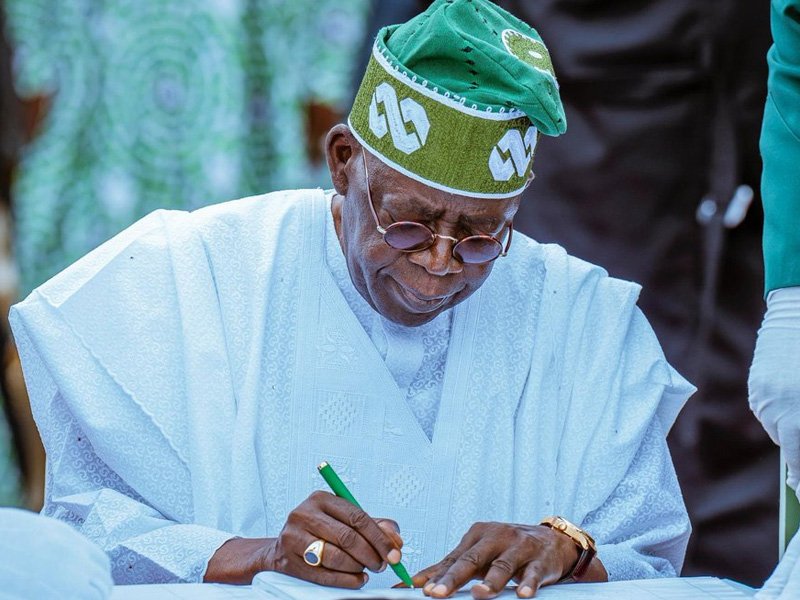
Nigeria’s Senate has approved President Bola Ahmed Tinubu’s proposed external borrowing plan of $20.517 billion and €1.045 billion for the 2026 and 2027 fiscal years, raising fresh questions about the country’s growing dependence on loans to finance government expenditure.
The approval was granted on Tuesday, November 24, following consideration of a report by the Senate Committee on Local and Foreign Debts, chaired by Senator Aliyu Wamakko. The House of Representatives had earlier approved the borrowing proposal.
The approved foreign-currency borrowing plan is estimated at approximately ₦29.6 trillion. It is intended to finance government projects and programmes, including infrastructure, agriculture, healthcare, education, water supply, security and employment generation.
However, the Senate’s approval has attracted attention because of the scale of the proposed borrowing and the country’s existing fiscal challenges.
In a separate resolution, the Senate also approved an additional external borrowing facility of ₦10.79 trillion to finance the deficit in the 2026 Appropriation Act.
The government says this facility was already provided for in the 2026 budget and does not represent an entirely new borrowing provision.
Deputy Senate President Jibrin Barau defended the borrowing proposals, arguing that Nigeria’s debt-to-GDP ratio currently stands at approximately 35 per cent and could rise to about 42 per cent after the proposed borrowing, still below the 70 per cent threshold he cited.
Barau also clarified that the $20.517 billion and €1.045 billion programme would not be accessed immediately. Individual facilities would be considered based on specific requirements and national priorities.
The approval comes at a time when the Tinubu administration is seeking to revise the 2026 budget, reducing projected expenditure from ₦68.323 trillion to ₦65.176 trillion.
Despite the proposed reduction, the fiscal deficit remains at approximately ₦31.457 trillion, while projected government revenue stands at ₦33.720 trillion.
The figures underline the pressure on government finances and the continued reliance on borrowing to meet expenditure commitments.
There is also a question surrounding the history of the borrowing request. Premium Times reported that the $20.5 billion and €1.045 billion plan had previously been withdrawn by the President before the Senate approved it on November 24. This has raised questions about the legislative process and the status of the request considered by lawmakers.
Senator Solomon Adeola, Chairman of the Senate Committee on Appropriations, supported the borrowing proposals but called for stronger legislative oversight to ensure that the funds are properly utilised.
With the National Assembly’s approval, attention now turns to the Federal Government’s eventual borrowing arrangements, the conditions attached to the facilities and how the funds will be spent.
For Nigerians already grappling with economic pressures, the central question remains whether the proposed loans will deliver measurable public benefits and how the country intends to manage the resulting debt obligations.