
































Frontline Chronicle | Politics
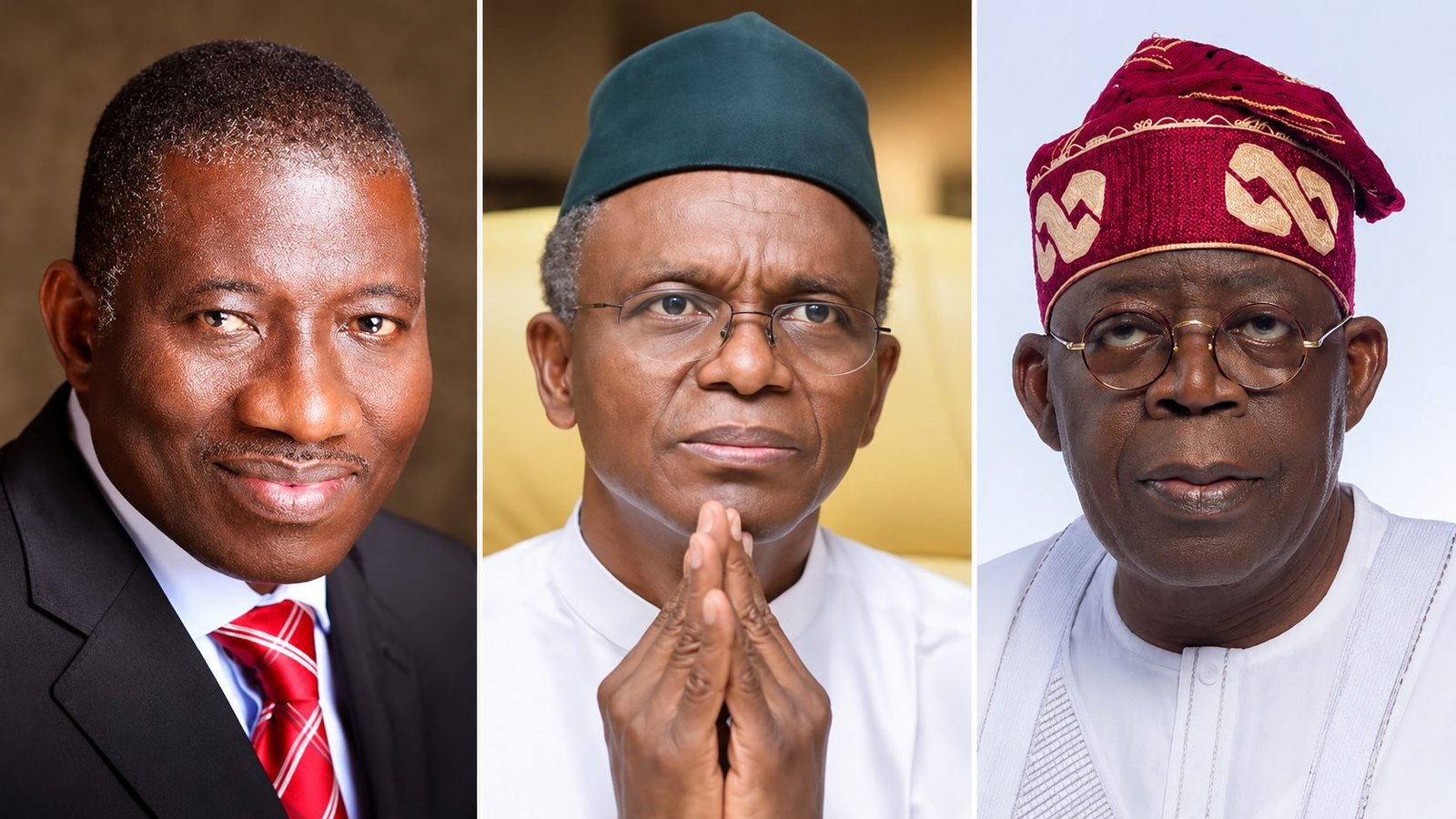
In this throwback political statement, former Kaduna State Governor Nasir El-Rufai delivered a blunt assessment of President Bola Ahmed Tinubu’s electoral prospects, arguing that money, incumbency, political defections and control of state institutions would not guarantee the president victory in the 2027 presidential election.
El-Rufai, who was once one of Tinubu’s prominent campaigners, drew on his experience during the 2023 presidential election to challenge the assumption that political influence automatically translates into votes.
“I was governor of Kaduna State; I was one of Bola Tinubu’s biggest campaigners, but I couldn’t deliver the state to him,” El-Rufai said.
He also pointed to Tinubu’s inability to secure victory in Lagos State during the presidential election, despite the APC’s control of the state government at the time, as evidence that incumbency and political machinery have their limits.
“Bola Tinubu himself couldn’t win his state with his own governor in place. So these things are not as theoretical as people want them to be,” he added.
In one of the most striking portions of his remarks, El-Rufai predicted that Tinubu would struggle to secure re-election, going as far as suggesting that the president could finish third in the first round of voting.
“The worst-case scenario in the 2027 elections is that no winner will emerge in the first round. We may have to go for a runoff, and Bola Tinubu will not be on the ballot for the runoff, because he will at best be third in the election,” he declared.
El-Rufai insisted that his assessment was based on electoral calculations and political analysis, dismissing the idea that Tinubu could simply rely on his position as president to secure another term.
“He has no pathway to win. I have done the maths. I have done the analysis. He cannot. He will at best be third,” he said.
The prediction presents a direct challenge to the APC’s confidence ahead of the next presidential election.
The former Kaduna governor also warned against assuming that control of government institutions and access to financial resources would guarantee victory.
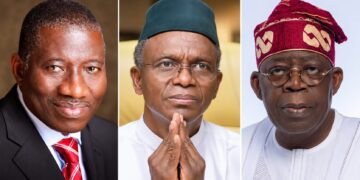
He argued that Tinubu should remember the experience of former President Goodluck Jonathan, who lost the 2015 presidential election to Muhammadu Buhari despite being the incumbent.
“But he can deceive himself. He may think, oh, you know, I have money, because they have taken all the money in the country; I have INEC, I have the police, I have the army,” El-Rufai said.
He then challenged Tinubu to reflect on Jonathan’s experience.
“President Tinubu, invite ex-President Goodluck Jonathan for a chat and ask him if he didn’t have all this in 2015, and we got him out. Is the case still the same? Similar to 2015? It’s worse,” he added.
The comparison raises a crucial question about the limits of presidential power during elections. While incumbency can provide significant political advantages, it does not eliminate voter dissatisfaction or guarantee that an incumbent will retain office.
Jonathan’s defeat in 2015 remains a major example of an incumbent president losing a competitive election in Nigeria.
El-Rufai’s remarks also challenged the assumption that the growing number of governors defecting to the APC would automatically translate into victory for Tinubu.
Political defections can strengthen a party’s organisational reach, influence local mobilisation and improve access to campaign structures. However, the votes cast by citizens ultimately determine the outcome of a presidential election.
His argument is that political leaders should not confuse control of government structures with control over the electorate.
He also disputed the popular claim that Tinubu has never lost an election, suggesting that his political reputation should not be mistaken for electoral invincibility.
El-Rufai urged Tinubu to learn from Jonathan’s defeat rather than assume that the advantages available to an incumbent president would be sufficient to secure another term.
With the 2027 presidential election approaching, El-Rufai’s assessment puts the spotlight on the relationship between political power and electoral performance.
The APC may command substantial political influence, but the opposition’s prospects will depend on its ability to unite around credible candidates, mobilise voters and present an alternative that addresses Nigerians’ concerns.
The central message of El-Rufai’s throwback statement is clear: controlling government does not mean controlling voters. Whether his prediction proves accurate will be decided by Nigerians at the ballot box in 2027.