



































By Frontline Chronicle
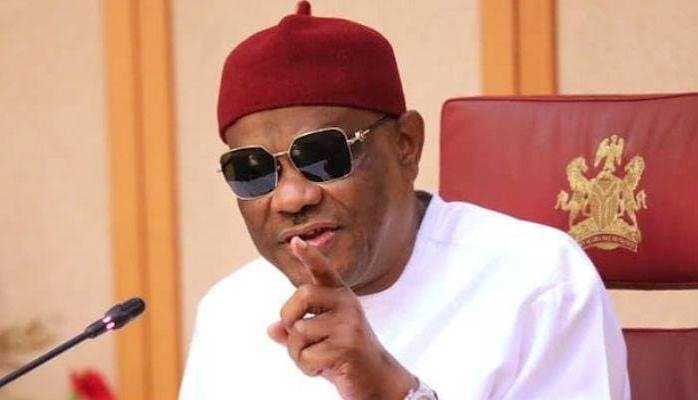
Minister of the Federal Capital Territory (FCT), Nyesom Wike, has promised a ₦10 million reward to every councillor who successfully delivers their political ward for President Bola Ahmed Tinubu in the 2027 general elections.
Wike made the announcement on Monday, November 9, 2026, during a stakeholders’ meeting of the Rainbow Coalition in Kwali Area Council, Abuja, where he addressed political stakeholders, traditional rulers and residents on the coalition’s mobilisation strategy for Tinubu’s re-election.
In a video of the event, the minister told participants that the Rainbow Coalition had adopted a financial reward system to encourage grassroots mobilisation and secure electoral support for the president.
“I couldn’t say so when the president came because they gave me only 10 minutes to talk, but now that I have time to talk, let me say that the Rainbow Coalition all over the federation has formed a mobilisation for Mr President to win this election.
“We are saying that any councillor who delivers his ward, go and take ₦10 million,” Wike declared.
He subsequently urged councillors to engage community leaders, youth groups and local associations to mobilise support for Tinubu ahead of the 2027 elections.
The FCT minister presented the proposed ₦10 million payment as part of the Rainbow Coalition’s strategy to strengthen political mobilisation at the ward level.
He encouraged councillors to take responsibility for securing support within their respective communities, insisting that grassroots engagement would be central to the coalition’s campaign.
Wike also expressed confidence in the ruling party’s support across parts of the FCT, specifically mentioning Kwali, Gwagwalada and Abaji as areas where he expects strong backing for the APC.
The minister further endorsed former FCT Senator Philip Aduda for the Senate seat and Danladi Chiya for the Abuja South Federal Constituency.
The announcement has generated debate over whether offering financial rewards to political officeholders based on electoral outcomes amounts to an inducement.
However, the National Chairman of the All Progressives Congress (APC), Nentawe Yilwatda, defended Wike’s proposal during an appearance on Channels Television’s Politics Today.
Yilwatda argued that the promised reward did not amount to vote buying, maintaining that the arrangement should be understood as political mobilisation.
His defence has added another dimension to the debate, particularly over the distinction between legitimate campaign expenditure and financial inducements intended to influence electoral outcomes.
The development has also raised questions about the legal implications of promising financial rewards tied to electoral performance.
Nigeria’s electoral laws prohibit corrupt inducements intended to influence voters or procure votes for a candidate. However, determining whether a particular financial arrangement violates the law requires examining its purpose, beneficiaries, conditions and how the money would be distributed.
The announcement has therefore drawn attention to the need for clarity over who will finance the proposed rewards, how a councillor’s successful delivery of a ward will be determined and whether the arrangement falls within permissible campaign expenditure.
INEC and the Economic and Financial Crimes Commission (EFCC) have not been reported to have issued an official position specifically addressing Wike’s ₦10 million pledge.
As political mobilisation intensifies ahead of the 2027 general elections, the controversy has renewed public discussion about the role of money in Nigerian electoral politics and the boundaries between campaign mobilisation, political incentives and prohibited inducements.