

























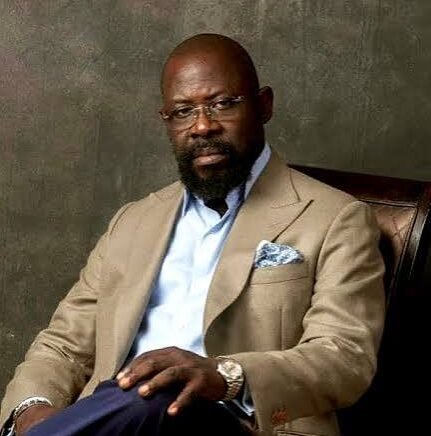
Human rights lawyer and activist Dele Farotimi has warned that Nigeria is sliding into dictatorship under the guise of democracy, arguing that President Bola Tinubu cannot preside over an election he stands to lose. He has called for a political revolution driven by a clear national vision and citizens prepared to defend their votes.
Human rights lawyer and activist Dele Farotimi has raised the alarm over Nigeria’s democratic future ahead of the 2027 general election, declaring that the country risks sliding into dictatorship while retaining the appearance of democratic governance.
Farotimi, in a strongly worded assessment of the political situation, questioned whether President Bola Tinubu would permit an electoral outcome that could remove him from power, contrasting the president with former President Goodluck Jonathan, who conceded defeat in the 2015 presidential election.
“Tinubu is not Jonathan, he is incapable of presiding over an election he will lose, and he has neither a pathway to victory, nor the narrative to explain the outcome he desires. If it were not so tragic, it’d be comedic; feudalism has birthed a monster,” Farotimi said.
His comments raise fundamental questions about electoral credibility, the conduct of political leaders and the strength of democratic institutions as Nigeria approaches another presidential election.
Jonathan’s concession in 2015 became a defining moment in Nigeria’s democratic history. Farotimi’s comparison suggests that he does not expect Tinubu to demonstrate the same willingness to accept an electoral defeat.
‘Your Votes Do Not Count’
Farotimi also questioned the ability of Nigerians to translate their votes into political outcomes, alleging that the judiciary would endorse disputed election results unless citizens actively resisted what he described as the installation of dictatorship.
“Your votes do not count and the judiciary will endorse it, unless me and you decide to do something about it, because we are sleeping while a dictatorship is being installed in our country democratically,” he said.
The activist’s criticism extends beyond the presidency to the institutions responsible for protecting electoral integrity and upholding the rule of law.
His warning places the judiciary and the electoral process at the centre of the debate over Nigeria’s democratic future. For Farotimi, the challenge facing the country is not simply the conduct of an election but whether the votes of citizens will determine who governs them.
The concerns also underscore the importance of electoral transparency, institutional independence and public accountability as political parties prepare for the 2027 contest.
Farotimi Demands Restructuring of Nigeria
Beyond his criticism of Tinubu and the country’s democratic institutions, Farotimi argued that Nigeria requires fundamental restructuring and a new national vision capable of uniting citizens across political and other divisions.
He called for the mobilisation of Nigerians around a common agenda that challenges the existing political order and offers an alternative direction for the country.
“The only thing that can be done to Nigeria is to restructure it, reimagine it, find a way to get together a critical mass of its victims, sell them a new version of this country, draw a line in the sand, and confront the system,” he said.
Farotimi’s position reflects his broader argument that Nigeria’s challenges cannot be resolved simply by replacing one political officeholder with another. He maintained that meaningful change requires a clear vision of the country Nigerians want to build and a movement capable of mobilising sufficient public support to achieve it.
‘It Will Take a Revolution to Save Nigeria’
The activist declared that a revolution would be necessary to save Nigeria, while acknowledging that the ballot box could provide a path to such a transformation.
“It will take a revolution to save Nigeria,” he said.
“That revolution might come through the ballot. I’m not convinced, but insufficient numbers are persuaded to believe in the vision, not the person.”
Farotimi’s remarks point to what he considers a major weakness in Nigeria’s political landscape: the tendency of political movements to revolve around individual personalities rather than clearly articulated ideas, policies and national objectives.
He argued that political leaders and movements must give voters a compelling reason to support their programmes and defend the outcome of elections.
“If you don’t place the vision for a new Nigeria on the ballot, you cannot mobilise the people to stand behind their votes,” he said.
The Challenge Ahead of 2027
With the 2027 general election approaching, Farotimi’s intervention draws attention to the questions of electoral credibility, judicial independence, political accountability and the capacity of citizens to influence the direction of governance.
His argument is that Nigeria’s democratic future will depend on more than the mobilisation of voters on election day. He maintains that citizens must organise around a common national vision and be prepared to defend their democratic rights.
The central question raised by his warning is whether Nigeria’s political movements can build a credible alternative that inspires public confidence, mobilises voters and offers a clear programme for national restructuring.
For Farotimi, the answer lies in moving beyond personality-driven politics towards a movement anchored in a defined vision for a new Nigeria.