


























By Frontline Chronicle | Politics | November 13, 2026
The All Progressives Congress (APC) Presidential Campaign Council has condemned the growing incidents of violence at political gatherings across Nigeria and called on security agencies to arrest and prosecute those responsible. However, its statement has triggered sharp reactions from Nigerians, with many questioning what they describe as selective outrage and demanding concrete action against suspected political thugs.
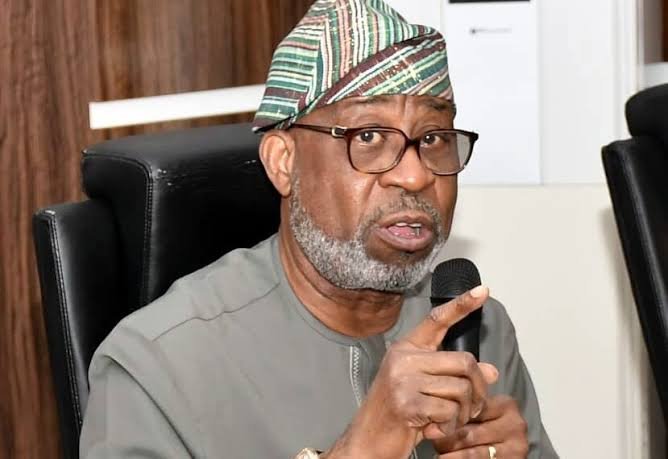
The controversy followed a statement issued on Thursday, November 12, by Dele Alake, spokesperson of the APC Presidential Campaign Council, condemning reported attacks in Edo, Cross River and Gombe states, as well as the disruption of the Nigeria Democratic Congress (NDC) town hall meeting in Lagos.
The statement called on political parties, politicians and supporters to exercise restraint, while urging security agencies to prevent political violence and ensure that perpetrators are brought to justice.
“Our campaign strongly condemns the disruption of today’s scheduled town hall meeting of the Nigeria Democratic Congress (NDC) in Lagos,” Alake stated.
The council also urged political parties to focus on issues that would improve the lives of Nigerians rather than engage in activities capable of triggering violence.
But rather than ending the debate, the statement has opened another conversation about political accountability, the protection of opposition activities and the responsibility of those in power to ensure that political gatherings remain safe.
Several Nigerians reacting to the statement questioned whether the APC’s condemnation would translate into meaningful action, particularly following the attacks on opposition gatherings.
One Nigerian described the statement as an example of what was called “selective outrage”, arguing that condemning political violence was insufficient without identifying and prosecuting those responsible.
The Nigerian specifically referenced the attack on the NDC town hall meeting in Oregun, Lagos, where suspected political thugs reportedly invaded the venue, assaulted attendees and journalists, damaged vehicles and seized media equipment.
The reaction questioned why the ruling party was issuing statements demanding arrests when Nigerians were still waiting for investigations and accountability over reported attacks on opposition activities.
“Democracy belongs to everyone, not just the ruling party. Stop the thuggery, identify the sponsors and prosecute those responsible. Nigerians deserve credible elections, freedom of assembly and the right to campaign without intimidation,” the Nigerian wrote.
Another Nigerian was more direct, calling on the APC to address allegations involving individuals suspected of disrupting NDC activities.
“Call your party’s thugs out. APC thugs disrupted NDC’s town hall meetings and attacked their members,” the Nigerian stated.
These reactions reflect a broader public debate over whether political parties are genuinely committed to peaceful elections or simply condemn violence when it becomes politically convenient.
Another Nigerian used a popular expression to question the circumstances surrounding the APC campaign council’s statement.
“A tale of the hunter who fired shots in the bush and ran outside to ask who’s firing the shots,” the Nigerian wrote.
The expression suggested that the condemnation was ironic, given accusations circulating among Nigerians that individuals linked to the ruling party were involved in attacks against opposition gatherings.
Another Nigerian expressed the criticism more bluntly with the statement:
“APC CONDEMNS ATTACKS BY APC THUGS. Urges APC police to arrest APC perpetrators.”
The reactions have further intensified public discussions about political violence, accountability and the protection of opposition parties ahead of the 2027 general elections.
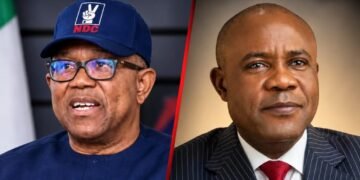
The NDC town hall meeting was scheduled to take place on Thursday at Classique Event Centre in the Oregun area of Lagos, with the party’s presidential candidate, Peter Obi, and his running mate, Rabiu Musa Kwankwaso, expected to address supporters.
However, suspected political thugs reportedly invaded the venue around 11 a.m., before the two politicians arrived, disrupting preparations and sending attendees scrambling for safety.
Reports indicated that multimedia journalist Samuel Adebanjo was assaulted during the incident, while his camera, gimbal and microphone were reportedly taken.
Vehicles were also damaged, and attendees sustained injuries. Police operatives arrived at the scene after the violence had begun and deployed tear gas to restore order.
The APC Presidential Campaign Council’s condemnation raises an important question: what happens after the press statement?
If the ruling party genuinely wants peaceful political participation ahead of 2027, Nigerians will expect it to support transparent investigations, cooperate with security agencies and publicly reject intimidation by anyone claiming political affiliation.
The security agencies also have a responsibility to investigate the reported attacks, identify those involved and prosecute offenders.
Political violence cannot become an acceptable feature of electioneering, regardless of whether the victims belong to the ruling party or the opposition.
The right to organise meetings, hold rallies, address supporters and campaign peacefully belongs to every political party.
As the 2027 general elections approach, Nigerians are demanding more than political condemnations. They want investigations, arrests, prosecution of offenders and credible assurances that opposition politicians and their supporters can participate in the democratic process without fear of attack.
For many Nigerians, the central question is no longer whether political violence should be condemned. It is whether those responsible will actually be held accountable.