



























By Theophilus Anya | Political Analysis | Frontline Chronicle
The controversy surrounding the reported attack on President Bola Ahmed Tinubu’s convoy in Abuja has exposed another troubling problem with the communication coming from the Presidency: an initial denial of an incident that the police later officially confirmed, followed by a presidential clemency directive ordering the release of 78 suspects arrested in connection with it.
The question Nigerians should be asking is simple: If there was no attack on President Tinubu’s convoy, as the initial presidential response suggested, what exactly was the President granting clemency for?
The incident occurred on Friday, November 13, 2026, shortly after Tinubu attended Jumu’ah prayers at the Shehu Shagari Central Mosque in Garki, Abuja.
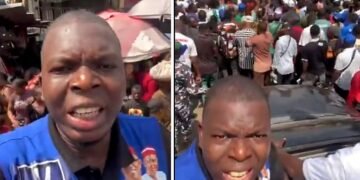
Videos circulated on social media showing groups of young people throwing objects at a convoy believed to be carrying the President. Some were also heard chanting anti-government slogans, including “Ba ma yi, ba ma so”, meaning “We don’t want you; we don’t support you.”
Rather than immediately acknowledge the incident and explain what happened, the Presidency initially challenged the reports.
O’Tega Ogra, Senior Special Assistant to the President on Digital Engagement, Strategy and New Media, dismissed reports that the President’s convoy had been attacked.
In a post accompanying footage of Tinubu leaving the mosque, Ogra wrote:
“Contrary to the narrative being pushed by the opposition, with videos of their alleged paid thugs at the National Mosque today, here is footage of Mr President leaving the mosque after Friday prayers this afternoon.”
That response raised questions because the footage of the President leaving the mosque did not, by itself, establish that no confrontation occurred elsewhere along the departing convoy’s route.
The government aide also introduced the allegation that the individuals involved were paid opposition thugs, but the public was not presented with evidence establishing that claim.
Then came the police statement.
On Monday, November 16, the Federal Capital Territory Police Command officially confirmed that President Tinubu’s motorcade had been attacked on November 13.
According to the police spokesperson, Josephine Adeh, some individuals attacked the departing convoy with stones and other dangerous objects, damaging several vehicles and injuring security operatives.
The command disclosed that 78 suspects had been arrested following the incident and subsequent intelligence-led operations.
This was the first official police confirmation of the attack.
So, what happened to the earlier dismissal of the incident as an opposition narrative?
The controversy became even more difficult to explain when the police announced that President Tinubu had extended clemency to those involved in the incident and directed that the 78 suspects be warned and released.
In its statement, the police command said:
“Following the extension of presidential clemency to the individuals involved in the attack, the Presidency directed that the suspects arrested in connection with the incident be warned and released.”
The suspects subsequently began undergoing the necessary release procedures.
This development raises a fundamental question about the Presidency’s initial response.
If the incident was merely an opposition narrative, as the presidential aide suggested, why did the police confirm an attack? Why were 78 people arrested? And why did the President extend clemency to individuals whom the police identified as suspects connected to the attack?
Clemency ordinarily presupposes that there is something for which leniency is being extended. The President’s decision to release the suspects does not, by itself, establish every allegation about the incident, but it makes the earlier blanket dismissal of the attack even more difficult to reconcile with the subsequent official account.
Nigerians deserve an explanation.
Was the initial presidential response based on incomplete information? Did the aide misunderstand the situation? Or was there an attempt to dismiss an embarrassing incident before the security agencies established what happened?
The Presidency should answer these questions instead of expecting Nigerians to ignore the contradiction.
One of the most disturbing aspects of the initial response was the suggestion that the videos and reports were part of an opposition-sponsored operation.
This approach reflects a troubling pattern in political communication: treating criticism, public dissatisfaction and embarrassing incidents as products of opposition manipulation before establishing the facts.
A government should be able to distinguish between genuine security threats, political protests, public frustration and deliberate misinformation.
If young Nigerians are dissatisfied with the government’s performance and express their displeasure, that dissatisfaction should not automatically be interpreted as evidence of an opposition conspiracy.
At the same time, throwing stones at a presidential convoy, damaging vehicles or injuring security personnel cannot be justified as democratic expression. Political dissatisfaction does not give anyone permission to commit violence.
However, condemning violence must not become an excuse for government officials to misrepresent events or dismiss legitimate questions.
The government owes Nigerians accurate information, particularly when an incident involves the President and national security.
Another issue requiring clarification is the decision to release all 78 suspects.
The police said some suspects were arrested during subsequent intelligence-led operations in the area. However, the public has not been given detailed information about their individual roles, the evidence against them or whether all those arrested were directly involved in the reported attack.
Were the suspects properly identified? Were statements obtained? Had any been charged before the clemency directive was issued? Were the 78 individuals all involved in throwing objects at the convoy, or did the subsequent operations sweep up other people?
These are legitimate questions.
If the government believes the suspects committed offences, Nigerians deserve to understand why the normal process of investigation and prosecution was replaced by a presidential clemency directive.
The President’s decision may have been intended to calm tensions, but it does not remove the need for transparency.
The Tinubu administration cannot expect Nigerians to accept one explanation on Friday and a substantially different official account on Monday without asking questions.
The initial denial, the police confirmation, the arrest of 78 suspects and the subsequent clemency directive have created a credibility problem that the Presidency must address.
There is a difference between defending a government and telling the public the truth. Presidential aides should not turn their positions into instruments for dismissing inconvenient developments or discrediting everyone who questions the administration.
If the President’s convoy was attacked, say so. If evidence shows that people were responsible, explain the findings. If the President decided to extend clemency, explain the reasons.
A government that demands public trust must first demonstrate that it can be trusted with the truth.
The Nigerian public should not have to wait for the police to contradict the initial narrative before receiving an accurate account of an incident involving the President.
The bigger issue is not whether Tinubu should have granted clemency. It is why the public was initially given a response that appeared to dismiss an incident the police later confirmed.
And that is the question the Presidency has yet to answer.