




































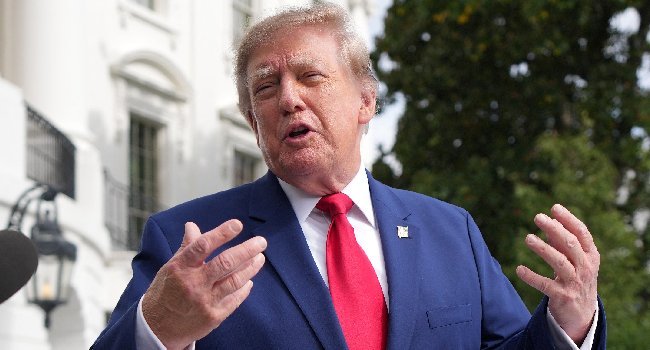
WASHINGTON, DC | November 4, 2026
The Democratic Party has secured control of both chambers of the United States Congress following a sweeping victory in the November 3 midterm elections, dealing a significant political setback to President Donald Trump and his Republican Party.
The results mark a major shift in the balance of political power in Washington, ending Republican control of both the House of Representatives and the Senate.
According to projections by the Associated Press and other major US media organisations, Democrats made significant gains across the country, defeating several Republican incumbents and winning traditionally Republican strongholds.
Among the notable victories was Democrat James Talarico’s historic Senate victory in Texas, ending decades of Republican dominance in statewide Senate elections. Democrat Gina Hinojosa also defeated incumbent Republican Governor Greg Abbott to become Texas’ next governor.
In Maine, Democrat Troy Jackson defeated Republican Senator Susan Collins, while other Democratic victories in Iowa, Kansas, Ohio, North Carolina and South Carolina contributed to the party’s takeover of the Senate.
The Democrats also recorded substantial gains in the House of Representatives, securing enough seats to take control of the lower chamber.
Trump Administration Faces New Congressional Opposition
The election outcome represents a significant challenge for President Trump, whose administration will now face increased scrutiny from a Congress controlled by the opposition.
With Democrats controlling both chambers, the party will have greater authority over legislative priorities, federal spending negotiations, congressional investigations and oversight of the executive branch.
Democrats have indicated that their priorities will include addressing the rising cost of living, government accountability and scrutinising policies pursued by the Trump administration.
The election campaign was largely shaped by concerns over inflation, economic pressures, the war involving Iran and allegations of corruption within government.
Trump had actively campaigned for Republican candidates, making himself a central figure in several key races. However, the results saw a number of candidates backed by the president suffer defeats.
Reacting to the outcome, Trump congratulated the Democrats and acknowledged their campaign efforts, while maintaining that the election results were not a personal rejection of his presidency.
A New Political Reality Ahead of 2028
The Democratic victory ushers in a new period of divided government in the United States, with the opposition now positioned to challenge several aspects of Trump’s legislative agenda.
Although Trump remains president and will continue serving his four-year term, the change in congressional control could make it more difficult for his administration to advance major legislative proposals.
The outcome also sets the stage for an increasingly competitive political environment ahead of the 2028 presidential election.
For Democrats, the immediate challenge will be translating their electoral gains into legislative action. For Republicans, the results raise questions about the party’s political direction and its strategy for the next presidential election.